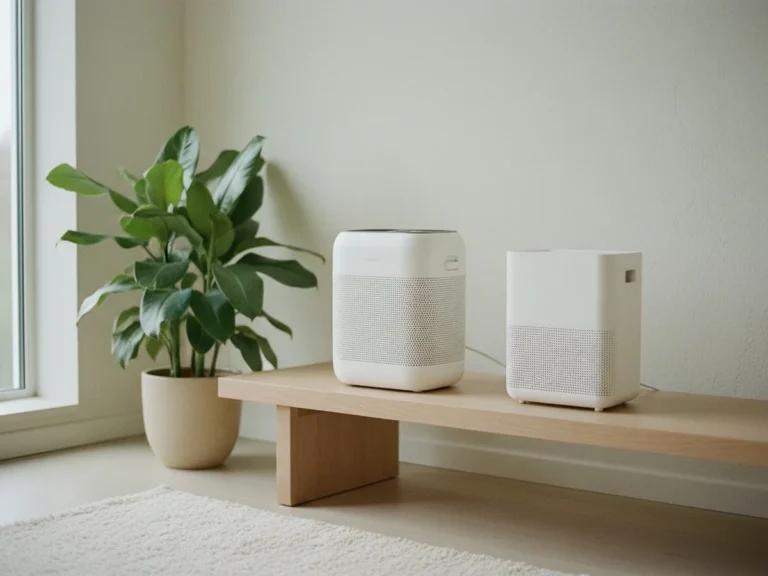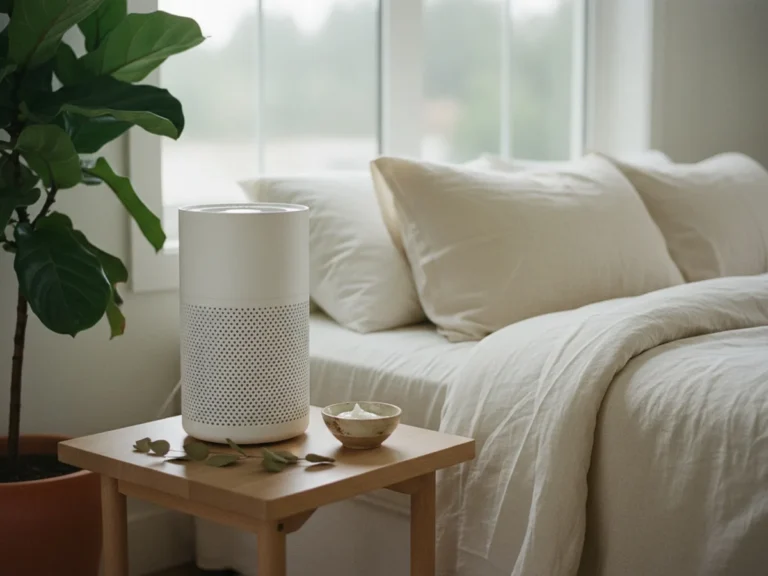
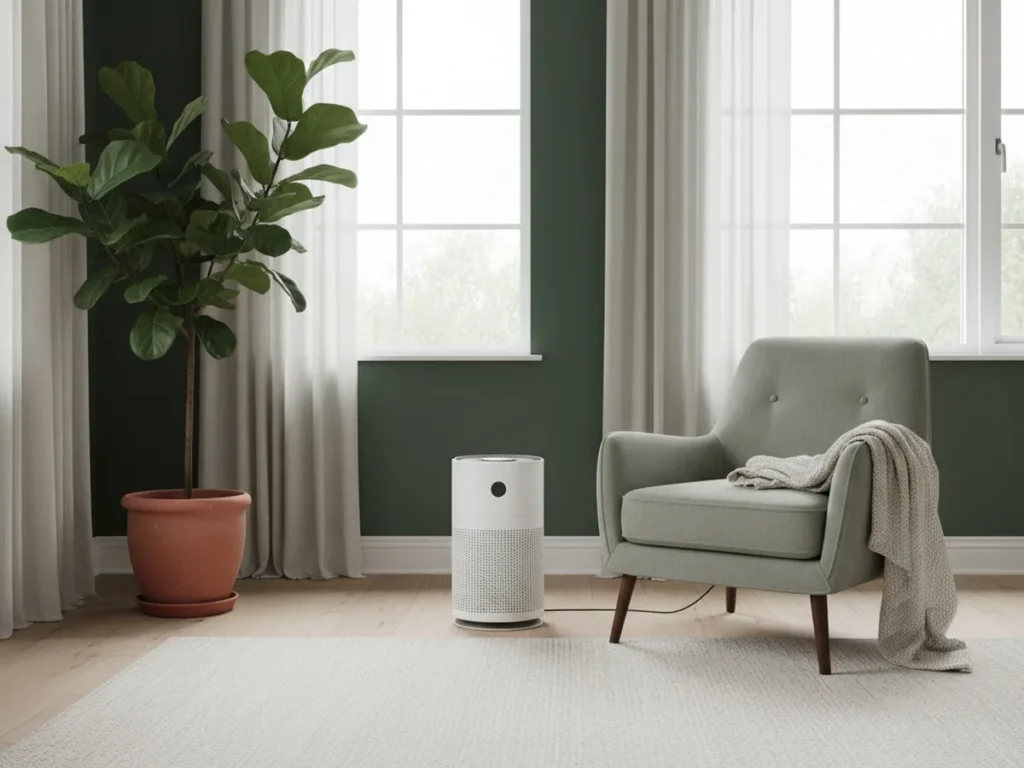
Yes, a true HEPA air purifier helps with cat allergies, because it captures the airborne dander that carries Fel d 1, the main cat allergen. It is not a cure on its own. The biggest wins come when you pair it with regular cleaning and a cat-free bedroom, since dander also settles on surfaces a filter never touches.
Key takeaways
– The thing you are allergic to is Fel d 1, a sticky protein in cat dander and saliva that rides on tiny airborne particles.
– A true HEPA filter is the part that matters. It captures 99.97 percent of particles down to 0.3 microns, which covers most airborne dander.
– Size the unit to your room using CADR and the coverage rating. An undersized purifier on a low setting does very little.
– Activated carbon is a separate layer that handles litter-box and pet odor. HEPA alone does not remove smells.
– A purifier reduces airborne allergen. Dander that has settled on bedding, couches, and carpet still needs cleaning, so treat the filter as one part of a plan.
Do air purifiers help with cat allergies?
Short answer: yes, but manage your expectations. The reason a purifier helps is mechanical. Cat allergen is mostly Fel d 1, a small sticky protein shed in dander and saliva that clings to particles light enough to float for a long time. Pull that air through a true HEPA filter and you remove most of those particles, so there is less floating allergen to breathe.
A 2020 review in Current Allergy and Asthma Reports looked at the studies on filtering cat allergen from indoor air and found that air filtration and portable devices reduced cat allergen in the air in the majority of studies tested (Gherasim et al., 2020, PMID 32409912). That is a real, measurable effect. What the same body of research is careful about is whether lower airborne allergen always translates into fewer symptoms for every person, because a lot of allergen also lives on surfaces. So the honest version is: a purifier lowers what you breathe, and for many people that helps, but it is one lever, not the whole machine.
What to look for in an air purifier for cat allergies
You do not need the most expensive unit. You need the right three things, sized to your room.
- True HEPA, not “HEPA-type.” True HEPA captures 99.97 percent of particles at 0.3 microns. Labels like “HEPA-like” or “99 percent” are weaker and not the same standard. This is the non-negotiable.
- CADR and room size. CADR (Clean Air Delivery Rate) tells you how fast the unit cleans air. Match it to your room so the air turns over several times an hour. A purifier rated for a 200 square foot bedroom does little in an open-plan living room.
- Activated carbon for odor. HEPA catches particles, not gases or smells. If litter-box or pet odor is part of the problem, you want a real carbon stage, not a thin pre-filter.
- Quiet enough to run on high. The unit only works while it runs. If it is too loud to leave on at night in the bedroom, it will sit on low and underperform.
- Sensible filter cost. Replacement HEPA and carbon filters are the real running cost. Check the price and schedule before you buy, not after.
How the key features compare
| Feature | What it does | Why it matters for cat allergies |
|---|---|---|
| True HEPA filter | Captures 99.97% of particles at 0.3 microns | Removes most airborne Fel d 1 dander, the core job |
| Activated carbon | Adsorbs odors and some gases | Handles litter and pet smell; HEPA alone does not |
| High CADR / correct room size | Faster, more complete air turnover | An undersized or slow unit barely moves the needle |
| Low noise on high setting | Lets you run it continuously | The filter only helps while it is actually running |
| Pre-filter for hair | Catches fur before the HEPA | Extends HEPA life, lowers replacement cost |
What an air purifier can and cannot do
This is the part the product listicles skip, so here it is plainly.
What it can do. It lowers the amount of cat allergen floating in the air of the room it is in. The research supports a real reduction in airborne cat allergen with filtration (Gherasim et al., 2020, PMID 32409912). Run continuously in the room where you spend the most time, usually the bedroom, that is where it earns its keep.
What it cannot do. It cannot reach allergen that has already settled. Fel d 1 is sticky and ends up on bedding, upholstery, carpet, and clothing, and a filter only treats what passes through it. It also cannot keep up if the source keeps shedding nearby. So a purifier works best as one layer in a plan that includes:
- A cat-free bedroom so you get eight allergen-lower hours a night. The Asthma and Allergy Foundation of America advises keeping pets out of your bedroom (AAFA, Control Indoor Allergens).
- Regular cleaning with a HEPA-filter vacuum and washing bedding in hot water, to remove the dander a purifier cannot reach. AAFA recommends washing bedding in water 130 degrees Fahrenheit or hotter each week (AAFA, Control Indoor Allergens).
- Wiping hard surfaces, since dander resettles. The filter handles the air; you handle the surfaces.
Think of it like the rest of a lower-tox home setup: the device does its job, but the routine around it is what makes the difference.
Top picks: safer, simpler choices
These are the categories we would shop in, not hype. We have not re-tested every model, so treat specific units as a starting point and check current specs.
- A solid bedroom HEPA + carbon unit. A well-reviewed true HEPA purifier sized for a bedroom, with a real carbon stage, is the best first buy for most people.
- A larger-room HEPA unit for open living spaces. If your main space is open-plan, step up the CADR rather than buying two small units.
- A HEPA-filter vacuum to pair with it. The purifier handles the air; a HEPA vacuum handles the settled dander it cannot reach.
Some links may be affiliate links. They never change our picks, and we only suggest gear we would use ourselves.
Related questions
- Best water filter for PFAS
- Air purifier for mold
- Clean water and air at home: what to filter for
- Is a HEPA filter worth it for pet dander?
FAQ
Do air purifiers really help with cat allergies?
Yes. A true HEPA air purifier removes most airborne cat dander, which carries the Fel d 1 allergen. A 2020 research review found air filtration reduced cat allergen in indoor air in most studies tested. It works best paired with cleaning and a cat-free bedroom, since dander also settles on surfaces.
How do you live in a house with cats when you are allergic?
Layer your defenses. Keep the bedroom cat-free, run a true HEPA purifier where you spend the most time, vacuum with a HEPA-filter vacuum, and wash bedding regularly. Wipe hard surfaces, since dander resettles. No single step is enough alone, but together they meaningfully lower what you breathe.
Is it okay to sleep with an air purifier on all night?
Yes, and for cat allergies it is the ideal use. The bedroom is where you spend the most continuous hours, so running a quiet true HEPA unit overnight is exactly when it does the most good. Choose a model quiet enough that you will actually leave it on.
Do air purifiers dry out the air?
No. An air purifier filters particles from the air; it does not remove moisture the way a dehumidifier does, so it will not dry out a room. If your air feels dry, that is usually the season or heating, and a separate humidifier is the fix.
Can you ever stop being allergic to cats?
Allergies can change over time, and some people see symptoms ease with long-term allergen reduction or medical treatment such as immunotherapy. That is a question for an allergist. Reducing exposure with filtration and cleaning helps your symptoms day to day, but it is not the same as a cure.
Written by Luc Dossis, founder of Toxlens. Reviewed 2026-06-10. See how we grade the evidence. Some links may be affiliate links, which never change our picks. This is exposure-reduction information, not medical advice.