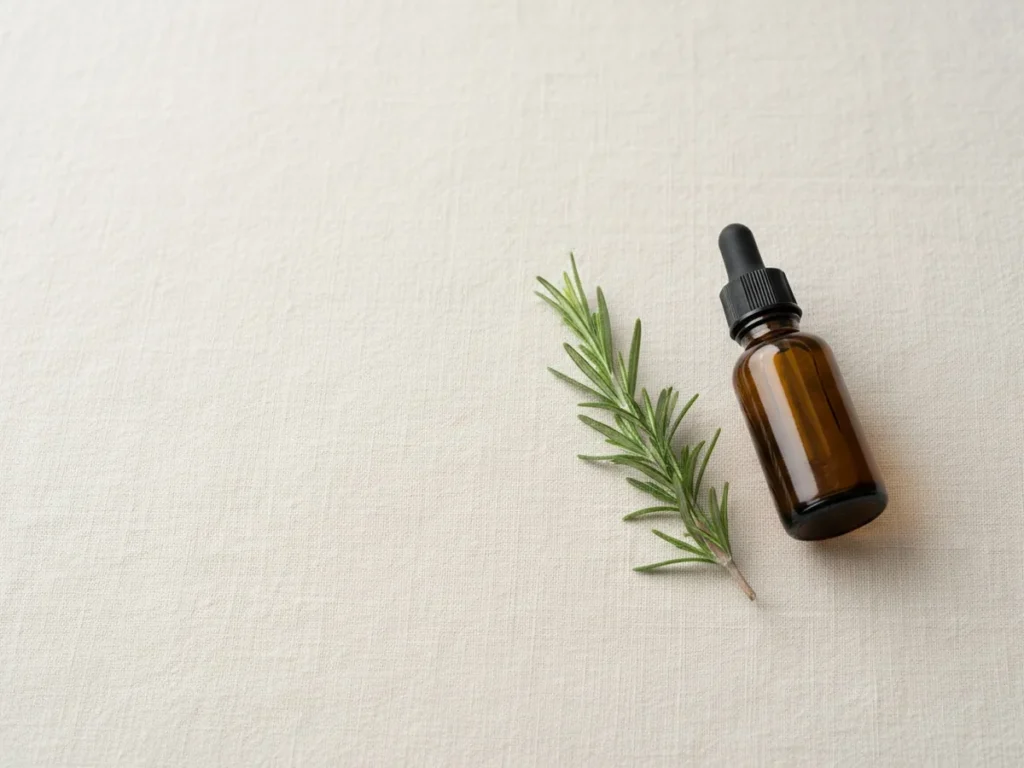
No, not at the amounts people actually use. The hormone-related findings for rosemary come from concentrated extracts in lab and animal studies, not from the diluted oil in shampoos, serums, or diffusers. Evidence that normal rosemary oil use disrupts your hormones is Limited.
Key takeaways
– Rosemary oil is not on the hormone-disruptor watchlist that lavender and tea tree are on.
– The hormone activity that exists shows up in concentrated extracts in the lab, at doses far above a diluted serum or diffuser.
– Safety data sheets classify rosemary oil as not containing an endocrine disruptor at or above 0.1 percent.
– The hair-loss worry (that it lowers DHT or causes gyno) is borrowed from the lavender and tea tree finding, and has not been shown for rosemary.
– The one real caution is concentrated rosemary essential oil in pregnancy, for a different reason: it can act as a uterine stimulant.Evidence strength: Limited. Mostly cell and animal studies on high-dose extracts. No human evidence that everyday rosemary oil use disrupts endocrine function, and a rat reproductive study found no effect at the highest dose tested.
Where did the rosemary worry come from?
If you searched this, there’s a good chance you saw it on a hair-loss forum. Men use rosemary oil on the scalp because a 2015 randomized trial put it on par with minoxidil 2 percent for hair growth (Panahi et al., 2015, SKINmed; PMID 25842469). That led to a logical worry: if it works on hair, is it messing with my hormones, lowering DHT, or causing gyno?
The worry is understandable, but it’s mostly borrowed. The oils that actually triggered the hormone-disruptor headlines are lavender and tea tree, after lab work and case reports suggested weak estrogen-like and anti-androgen activity (Endocrine Society, 2018). Rosemary was not part of that finding. People have since assumed it applies to every essential oil. It doesn’t.
What the research actually shows
Rosemary compounds can act on hormone receptors in a dish or at high oral doses. That has not been shown to carry over to normal topical or aromatherapy use.
- It is not classified as an endocrine disruptor. Manufacturer safety data sheets for rosemary oil state it “does not contain an endocrine disruptor at a concentration of 0.1 percent or above” (Carl Roth SDS).
- The hormone activity is in concentrated extracts. A rosemary extract standardized to carnosic acid promoted breakdown of the androgen receptor in human prostate cancer cells in the lab, an anti-androgen effect studied for cancer, not a real-world exposure (PubMed 24598693). Carnosol, another rosemary compound, acted as an antagonist at both the estrogen and androgen receptors in prostate cancer cell studies (Johnson et al., 2010, Cancer Prevention Research; PMID 20736335). These are receptor-level effects at doses a diffuser never delivers.
- A reproductive toxicity study found no hormonal effect. Rats fed an acetone extract of rosemary from before mating through lactation showed no general toxicity and no effects on fertility, estrous cycles, or reproductive organs at the highest concentration tested (PubMed 33321148).
- Some animal work is protective, not harmful. Rosemary extract improved hormone measures in animals exposed to a pesticide (PMC10657936), and rosemary oil has been studied as protective of testosterone production through LH and StAR signaling (Scientific Reports, 2025).
For the wider picture, the most-cited review of essential oils and hormones lays out how this is actually tested and which oils raised concern (Ramsey et al., 2020). Rosemary is not flagged there as a disruptor.
How rosemary compares to the oils that are flagged
| Essential oil | On the hormone-disruptor radar? | What the evidence is |
|---|---|---|
| Lavender | Yes, weakly | Lab studies show weak estrogen-like and anti-androgen activity, linked to gynecomastia case reports (Endocrine Society, 2018) |
| Tea tree | Yes, weakly | Same body of lab work as lavender, weak effects, researchers urged more study |
| Rosemary | No | Not classified as an EDC (safety data sheets), hormone activity only in concentrated lab extracts, some animal data is protective |
Does rosemary oil lower DHT or cause gyno?
This is the hair-loss community’s real question, so here’s the direct answer: there is no human evidence that topical rosemary oil lowers DHT enough to cause gynecomastia or systemic anti-androgen effects. The anti-androgen activity that exists was measured in cancer cells treated with concentrated extract, not in men rubbing a diluted oil on their scalp. The gyno fear is extrapolated from the lavender and tea tree case reports, which involved different chemistry. If you use rosemary oil for hair, current evidence does not support a hormone worry at that dose.
How exposure actually happens
Most people meet rosemary oil three ways: in skin and hair products, in aromatherapy and diffusers, and as the culinary herb. The amount in a diffuser session or a diluted scalp treatment is a tiny fraction of the extract doses used in the lab studies above. Cooking with rosemary delivers less still.
Who should care most
- Pregnancy. This is the real caution, and it is not about endocrine disruption. Concentrated rosemary essential oil and supplements are generally advised against in pregnancy because rosemary can act as a uterine stimulant and contains camphor. Rosemary as a cooking herb in normal food amounts is considered fine. If you are pregnant, skip the concentrated oil and supplements unless your doctor or midwife clears it (American Pregnancy Association).
- People taking high-dose rosemary supplements. The receptor activity that exists shows up with concentrated extracts, so a supplement is more worth a conversation with your doctor than the oil in a shampoo.
- Everyday users in hair, skin, or diffusers. The current evidence does not support an endocrine-disruption worry at these amounts.
Safer swaps
If you would rather keep concentrated essential-oil exposure low, in pregnancy or just by preference:
- A fragrance-free scalp and hair oil for anyone avoiding essential oils
- A rosemary-free hair-growth option such as a caffeine or peptide serum
- Use culinary rosemary for cooking, and keep concentrated oils to clearly labeled, properly diluted products
Related questions
- Is lavender an endocrine disruptor?
- Is tea tree oil an endocrine disruptor?
- Is phenoxyethanol an endocrine disruptor?
- Are essential oils safe during pregnancy?
FAQ
Does rosemary oil mess with your hormones?
For everyday use, no. The hormone-related findings come from concentrated rosemary extracts in lab and animal studies, not the diluted oil in shampoos, serums, or diffusers. There is no human evidence that normal rosemary oil use disrupts endocrine function.
Does rosemary oil raise estrogen levels?
There is no good evidence it does at normal use. In cell studies some rosemary compounds interact with estrogen receptors, but that happens at high lab doses, and a rat reproductive study found no hormonal effect at the highest dose tested. Everyday topical or diffuser use is a tiny fraction of that.
Does rosemary oil lower DHT or cause gyno?
No human evidence supports this. The anti-androgen activity was seen in cancer cells treated with concentrated extract, not in people using diluted oil on the scalp. The gyno worry is borrowed from the lavender and tea tree case reports, which is different chemistry.
Which essential oils are not endocrine disruptors?
Most are not. The two with weak lab evidence of hormone activity are lavender and tea tree. Rosemary, peppermint, and most others are not classified as endocrine disruptors, though concentrated essential oils should still be diluted and used with care, especially in pregnancy.
Is rosemary oil safe during pregnancy?
Culinary rosemary in food amounts is considered safe. Concentrated rosemary essential oil and supplements are generally advised against in pregnancy because rosemary can act as a uterine stimulant, which is separate from endocrine disruption. Check with your doctor or midwife first.
Written by Luc Dossis, founder of Toxlens. Reviewed 2026-06-10. See how we grade the evidence in our methodology. This is exposure-reduction information, not medical advice.