It depends which silicone you mean. Solid, food-grade silicone (the rubbery polymer in good bakeware and baby bottle nipples) is largely inert. But a related group of compounds, the cyclic siloxanes D4, D5, and D6, do act as endocrine disruptors in animal studies, and some real products leach them. Evidence here is Moderate.
Key takeaways
– “Silicone” is two different things. The stable solid polymer is one. The small ring-shaped molecules called cyclic siloxanes (D4, D5, D6) are the actual hormone concern.
– D4 shows weak estrogen-like activity and D5 disrupts fertility-related processes in animal studies. The EU restricts both in many cosmetics.
– Solid food-grade silicone is approved by the FDA and EFSA and does not readily break down or absorb into the body.
– The catch: one study found 84 percent of tested silicone kitchenware leached endocrine-disrupting chemicals, often from additives and metals, not the silicone itself.
– Silicone and microplastics is a separate question. Silicone is not a classic microplastic, but it can shed particles. We cover that on its own page.Evidence strength: Moderate. The hormone effects of siloxanes come from consistent animal evidence plus active regulatory restriction in the EU. The leaching finding comes from one well-cited product study. Human outcome data is still limited.
First, “silicone” is two different things
This is the whole reason the answer feels confusing. People use one word for two very different materials.
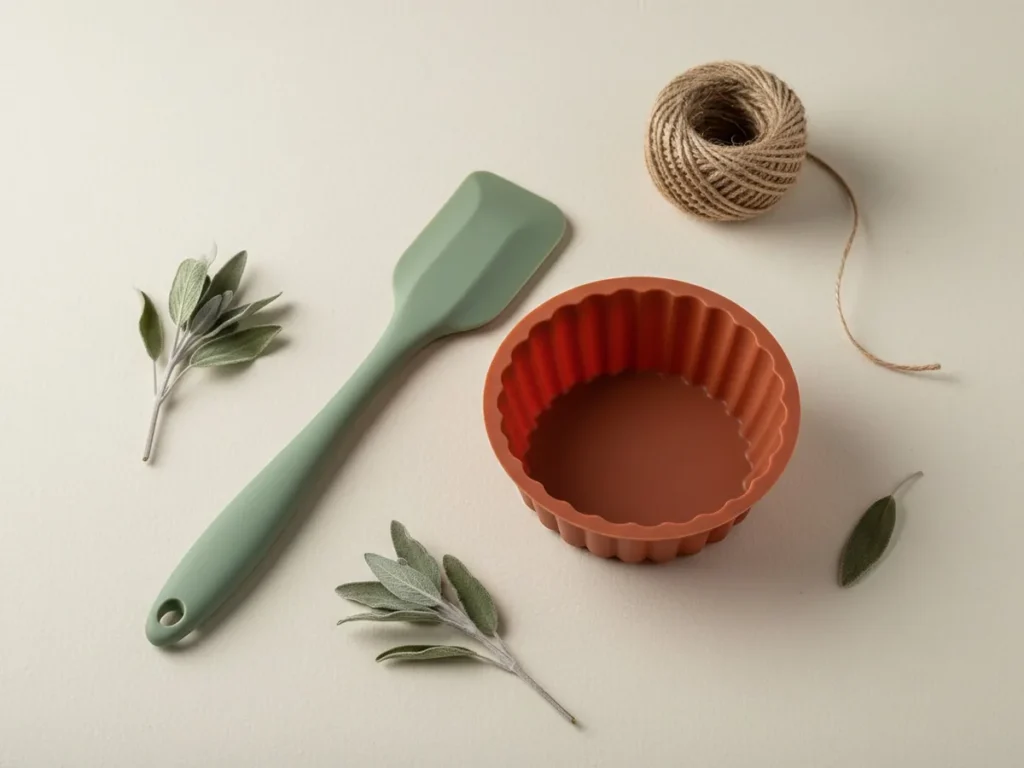
The first is solid silicone, also called polydimethylsiloxane or dimethicone. It is the rubbery, heat-stable polymer in quality bakeware, spatulas, menstrual cups, and baby bottle nipples. These are large chain-like molecules that do not easily break apart.
The second is cyclic siloxanes, small ring-shaped molecules with shorthand names like D4, D5, and D6. They show up in some cosmetics, hair products, and lower-quality liquid silicone. These are the molecules that carry the hormone concern. When a headline says “silicone is an endocrine disruptor,” it almost always means these.
What the research actually shows
The honest picture: the small siloxanes have real hormone activity in animals, the solid polymer mostly does not, and the messy part is what leaches out of a finished product.
- D4 shows weak estrogen-like activity. A 2025 review in the Journal of Applied Toxicology reports that D4 (octamethylcyclotetrasiloxane) binds weakly to estrogen receptors and, in animal studies, increased uterine weight and altered the estrous cycle (Marrugo-Padilla et al., 2025). This is animal evidence, not proof of harm at everyday human exposure.
- D5 disrupts fertility-related processes. The same review found that D5 does not bind estrogen receptors but interferes with follicle growth, endometrial receptivity, and steroidogenesis (how the body makes hormones), linked in chronic animal exposure to reproductive harm (Marrugo-Padilla et al., 2025).
- Most tested kitchenware leached EDCs. A 2023 study analyzed 42 food-contact silicone products and found that about 84 percent showed endocrine-disrupting activity. The surprise: metals contributed roughly 71 percent of the effect, alongside phthalates and additives, even when individual metals met legal limits (Feng et al., 2023, Science of the Total Environment). The hormone activity often came from what was added during manufacturing, not the pure silicone.
- Solid food-grade silicone is treated as safe by regulators. The FDA permits food-grade dimethylpolysiloxane as a food additive under 21 CFR 173.340, and the EU approves it as additive E900 (FDA Substances Added to Food: dimethylpolysiloxane). Industry assessments argue D4 “does not behave like an endocrine disruptor” at relevant doses, a position regulators partly share and partly dispute (Global Silicones Council).
So the verdict lands on Mixed for a reason. The material that touches most people most often, solid food-grade silicone, looks inert. The siloxane molecules linked to hormone effects are real, which is why the EU acted, and a finished product can still carry leachable additives.
Solid silicone vs cyclic siloxanes
| Feature | Solid food-grade silicone | Cyclic siloxanes (D4, D5, D6) |
|---|---|---|
| What it is | Stable rubbery polymer (dimethicone, PDMS) | Small ring-shaped molecules |
| Where you meet it | Bakeware, spatulas, cups, bottle nipples | Some cosmetics, hair products, liquid silicone |
| Hormone activity | Largely inert, not readily absorbed | Weak estrogen-like (D4), fertility effects (D5) in animals |
| Regulatory status | FDA GRAS, EU additive E900 | EU restricts D4, D5, D6 in many cosmetics |
| Endocrine disruptor? | Not classified as one | Yes, treated as a concern |
How exposure actually happens
For most people, silicone exposure comes through three doors. Kitchenware and bakeware that touch hot, fatty food. Personal care products like hair serums, primers, and deodorants that may contain liquid siloxanes. And medical items like tubing or implants.
The realistic risk is not the solid polymer itself. It is two things on top of it: cyclic siloxanes in some cosmetics, and leachable additives or metals in cheaper kitchenware exposed to high heat. Heat, fat, and long contact times raise how much migrates. A spatula stirring a sauce is a smaller exposure than a low-quality mold baking oily food at high temperature for an hour.
Who should care most
- Pregnancy. Because D4 and D5 act on reproductive processes in animal studies, lowering siloxane exposure during pregnancy is a reasonable precaution. That means checking cosmetic labels, not throwing out a quality silicone spatula.
- Infants and young children. For baby items like bottle nipples and feeding products, choose well-known brands that state food-grade or medical-grade silicone, and replace anything sticky, smelly, or discolored.
- People trying to conceive. The fertility-related findings for D5 are animal data, but if you are reducing overall chemical exposure, siloxanes in leave-on cosmetics are a fair place to trim.
This is exposure-reduction information, not medical advice. None of it means you should stop using a diagnosed treatment or change medication.
Safer swaps
If you want to keep siloxane and additive exposure low without overhauling your kitchen:
- Choose platinum-cured, food-grade or medical-grade silicone for items that touch hot food, and skip unbranded molds
- For high-heat cooking, use stainless steel or glass bakeware where you can, and keep silicone for lower-heat tasks
- Scan personal care labels for siloxane and “-cone” ingredients (cyclomethicone, cyclopentasiloxane) if you are cutting siloxanes
Related questions
- Does silicone have microplastics?
- Is dimethicone an endocrine disruptor?
- Are phthalates endocrine disruptors?
- Is silicone better than plastic?
FAQ
Does silicone mess with hormones?
Solid food-grade silicone is largely inert and is not classified as an endocrine disruptor. The hormone concern is with cyclic siloxanes (D4, D5, D6), small molecules in some cosmetics and lower-quality silicone. In animal studies these show weak estrogen-like and fertility-related effects, which is why the EU restricts them.
Is 100 percent silicone toxic to humans?
Pure, solid food-grade silicone is treated as safe by the FDA and EU. It does not easily break down or absorb into the body. The toxicity concerns come from cheaper products that leach additives, metals, or cyclic siloxanes, especially under high heat with fatty foods over long contact times.
Why should you avoid silicone?
Most people do not need to avoid solid food-grade silicone. The reasons to be cautious are specific: cyclic siloxanes in some cosmetics, and low-quality kitchenware that can leach endocrine-disrupting chemicals when heated. Choosing food-grade or medical-grade products handles most of the concern.
Are siloxanes the same as silicone?
Not quite. Siloxanes are the small ring-shaped building blocks (like D4 and D5), while silicone usually refers to the larger, stable polymer chains. The polymer is inert. The small cyclic siloxanes are the ones linked to endocrine effects in animal research and restricted in EU cosmetics.
Written by Luc Dossis, founder of Toxlens. Reviewed 2026-06-10. See how we grade the evidence in our methodology. This is exposure-reduction information, not medical advice.