To remove microplastics from drinking water, the most effective home filters are reverse osmosis and filters certified to NSF/ANSI 401, with quality carbon-block filters also reducing them. Microplastics are now found in most tap and bottled water, but the particles are large compared with the pores of a good filter, so the right system removes the vast majority. The key is certification, not marketing claims.
Key takeaways
– Reverse osmosis removes up to about 99% of microplastics thanks to an extremely fine membrane.
– Look for NSF/ANSI 401 certification, the standard that specifically covers microplastics.
– A certified carbon-block filter is a lower-cost option that also reduces microplastics; a basic loose-carbon pitcher may not.
Why filtering microplastics works
Microplastics are small, but on a filter’s scale they are relatively large. Most are bigger than a micron, while a reverse-osmosis membrane has pores around 0.0001 microns and a good carbon block filters down to roughly half a micron. That size gap is why filtration is effective: the water passes and the plastic particles do not. Microplastics are widespread in drinking water, so for many households this is a worthwhile step. See how to reduce microplastics in your body.
Reverse osmosis: the most thorough
Reverse osmosis (RO) pushes water through a semipermeable membrane so fine that studies show it can remove well over 99% of microplastics, along with dissolved contaminants like PFAS, lead, and fluoride. It is the most thorough home option. The trade-offs are that RO systems cost more, are usually installed under the sink, send some water to drain, and strip beneficial minerals (many units add a remineralization stage). See reverse osmosis for microplastics.
Carbon block: the practical middle ground
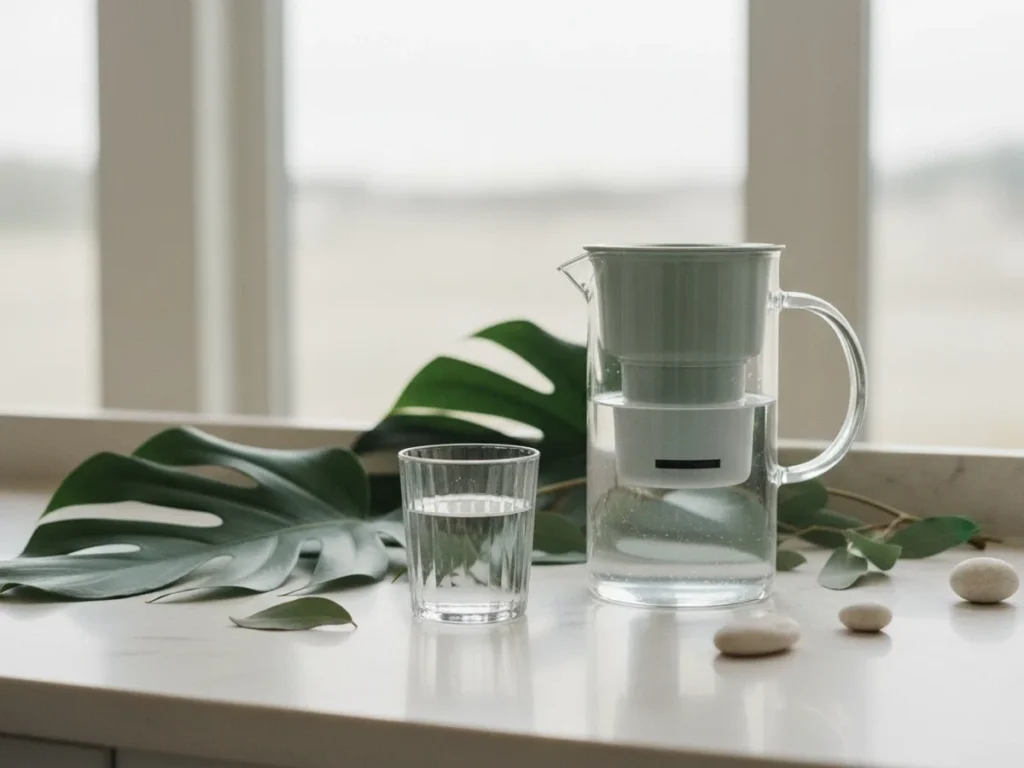
A solid carbon-block filter, the kind in better under-sink and pitcher systems, physically strains particles down to around 0.5 micron while also improving taste and reducing chlorine and some other contaminants. It removes many microplastics at a fraction of RO’s cost and water waste. The catch is quality: a dense carbon block works, while a loose granular-carbon pour-through pitcher with large gaps may let smaller particles through. See activated carbon water filters.
Why certification is the thing to check
Any product can claim to remove microplastics, so look for independent certification instead. NSF/ANSI 401 is the standard that specifically addresses “emerging contaminants,” including microplastics, and a system certified to it has been lab-tested for that claim. NSF/ANSI 53 (carbon, health contaminants) and 58 (reverse osmosis) are also reassuring. If a filter only carries NSF 42 (taste and odor) or no certification at all, treat the microplastics claim with skepticism.
What does not remove microplastics
Boiling does not filter plastic particles out, though letting boiled hard water cool and settle can trap some in limescale. A basic charcoal pitcher without fine filtration or 401 certification offers limited assurance. And bottled water is not a fix: testing has found microplastics in bottled water too, often more than tap, plus the bottle itself sheds plastic. See microplastics in bottled water.
FAQ
What is the best water filter for microplastics?
Reverse osmosis is the most thorough, removing around 99% of microplastics plus dissolved contaminants. A certified carbon-block filter is a strong lower-cost alternative. Whichever you choose, look for NSF/ANSI 401 certification.
Do Brita or basic pitcher filters remove microplastics?
A basic loose-carbon pour-through pitcher offers limited assurance unless it is specifically certified to NSF/ANSI 401. Denser carbon-block filters and certified models are more reliable for microplastics.
Does boiling water remove microplastics?
Not by filtration. Boiling does not strain plastic out, although in hard water some particles can become trapped in limescale as it forms and settles. A certified filter is the dependable method.
What certification should I look for?
NSF/ANSI 401 specifically covers microplastics and emerging contaminants. NSF/ANSI 53 (carbon) and 58 (reverse osmosis) are also good signs. A filter with only NSF 42 or no certification has not proven microplastic removal.
Is filtered tap water better than bottled for microplastics?
Generally yes. Testing has found microplastics in bottled water, often at higher levels than tap, and the plastic bottle adds more. A certified home filter is usually the lower-plastic, lower-cost choice.
The bottom line
Microplastics are in most drinking water, but a properly certified filter removes the large majority. Reverse osmosis is the most thorough, a certified carbon block is the practical middle ground, and NSF/ANSI 401 is the certification that proves the claim. See the best water filter for microplastics and PFAS.