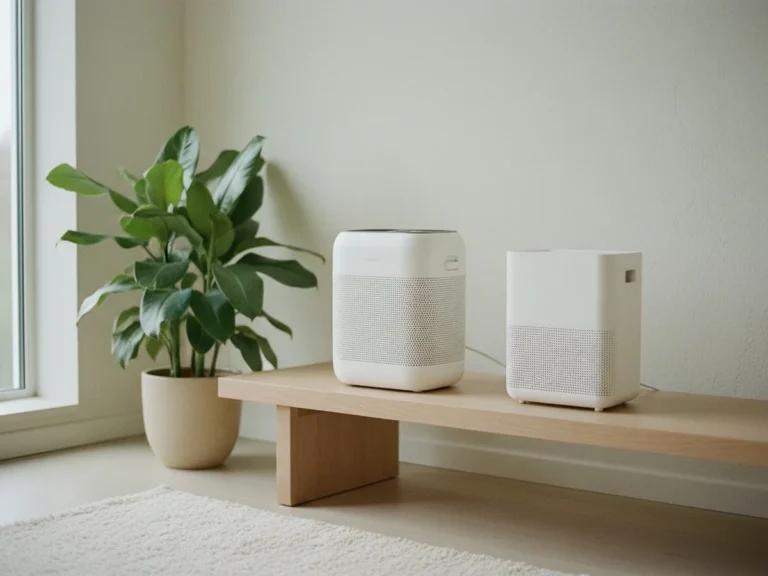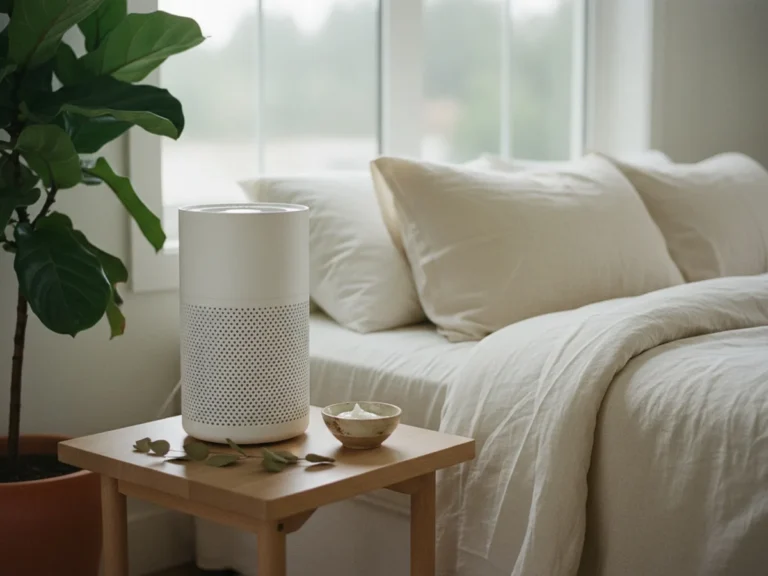
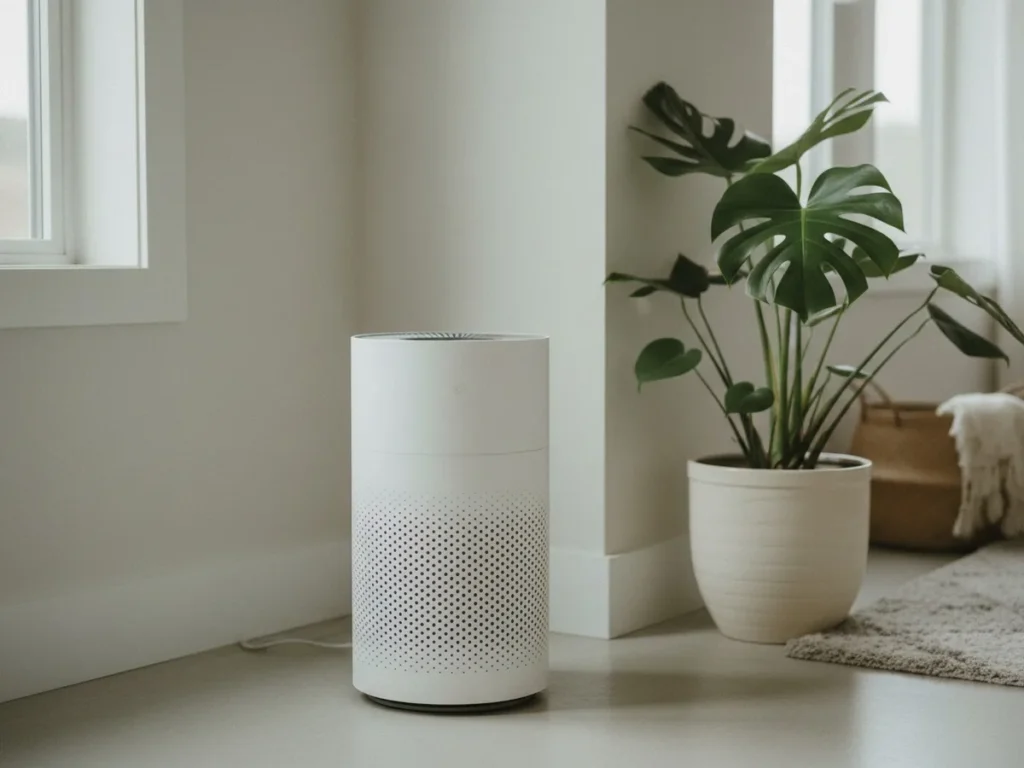
A HEPA air purifier is one of the most effective tools for indoor allergies because a true HEPA filter captures at least 99.97% of airborne particles down to 0.3 microns, including pollen, pet dander, dust mite debris, and mold spores. It will not replace cleaning and allergen-source control, and it does not remove gases or odors without an added carbon filter, but used the right way it measurably lowers the allergens you breathe.
Key takeaways
– True HEPA captures at least 99.97% of particles at 0.3 microns, the size that includes most airborne allergens.
– It works on airborne particles only; settled dust and embedded allergens still need cleaning.
– For best results, size the unit to the room, run it continuously, and pair it with allergen-source control.
What HEPA actually filters
HEPA stands for high-efficiency particulate air, and a true HEPA filter is defined by capturing at least 99.97% of particles that are 0.3 microns in size, the hardest size to catch, with even higher efficiency for larger and smaller particles. That range covers the common indoor allergens: pollen, pet dander, dust mite droppings, and mold spores. This is why allergists and groups like the American College of Allergy, Asthma and Immunology list HEPA air cleaning as a useful measure for allergy sufferers.
What it will not do
HEPA has clear limits worth understanding. It captures particles, not gases, so it does not remove odors, cooking smells, or volatile organic compounds (VOCs) unless the unit also has an activated carbon filter. It only cleans air that passes through it, so allergens that have settled into carpet, bedding, and upholstery still need to be removed by cleaning. And it does nothing about the moisture that lets mold grow. See air purifier vs dehumidifier for mold.
Sizing and placement
An air purifier only helps if it can actually process the room’s air. Match the unit’s rated room size (often expressed as a CADR, clean air delivery rate) to the space, and put it in the room where you spend the most time, usually the bedroom. Running it continuously on a moderate setting generally beats blasting it occasionally, since allergen levels rebound when it is off. Keep doors and windows closed during high-pollen periods so it is not fighting a constant inflow.
Source control comes first
Both the EPA and the Asthma and Allergy Foundation of America make the same point: air cleaners help, but reducing allergens at the source is more effective. That means washing bedding in hot water, using allergen-proof mattress and pillow covers, vacuuming with a HEPA vacuum, controlling humidity, and keeping pets out of the bedroom. A purifier is a strong complement to those steps, not a substitute for them. See air purifiers for pet allergies.
How to choose one
Look for a unit that states “true HEPA” (not “HEPA-type” or “HEPA-like”), is rated for your room size, and includes an activated carbon stage if odors or VOCs are a concern. The AAFA’s certified asthma and allergy friendly program tests purifiers for allergen reduction, which is a useful third-party signal. Avoid ozone-generating “ionic” purifiers, since ozone is a lung irritant. See air purifiers for allergies and asthma.
FAQ
Do HEPA air purifiers help with allergies?
Yes. A true HEPA filter captures at least 99.97% of airborne particles at 0.3 microns, including pollen, pet dander, dust mite debris, and mold spores, which measurably lowers the allergens you breathe when the unit is sized and run correctly.
What allergens does HEPA remove?
HEPA removes airborne particulate allergens: pollen, pet dander, dust mite droppings, and mold spores. It does not remove gases or odors unless the purifier also has an activated carbon filter.
Is a HEPA air purifier enough on its own?
No. It is most effective combined with source control, washing bedding, using allergen-proof covers, HEPA vacuuming, and humidity control. The EPA and AAFA both note that reducing allergens at the source matters more than air cleaning alone.
Where should I put an air purifier for allergies?
In the room where you spend the most time, usually the bedroom, sized to that room’s square footage. Run it continuously on a moderate setting and keep windows closed during high-pollen periods.
What HEPA rating should I look for?
Look for “true HEPA” rather than “HEPA-type,” a clean air delivery rate (CADR) matched to your room, and ideally AAFA certification. Add an activated carbon stage if odors or VOCs are a concern, and avoid ozone-generating ionic units.
The bottom line
A true HEPA air purifier is a genuinely effective allergy tool, pulling pollen, dander, dust mite debris, and mold spores out of the air you breathe. Size it to the room, run it continuously, add carbon for odors, and pair it with source control, and it earns its place. See whether air purifiers help with dust.