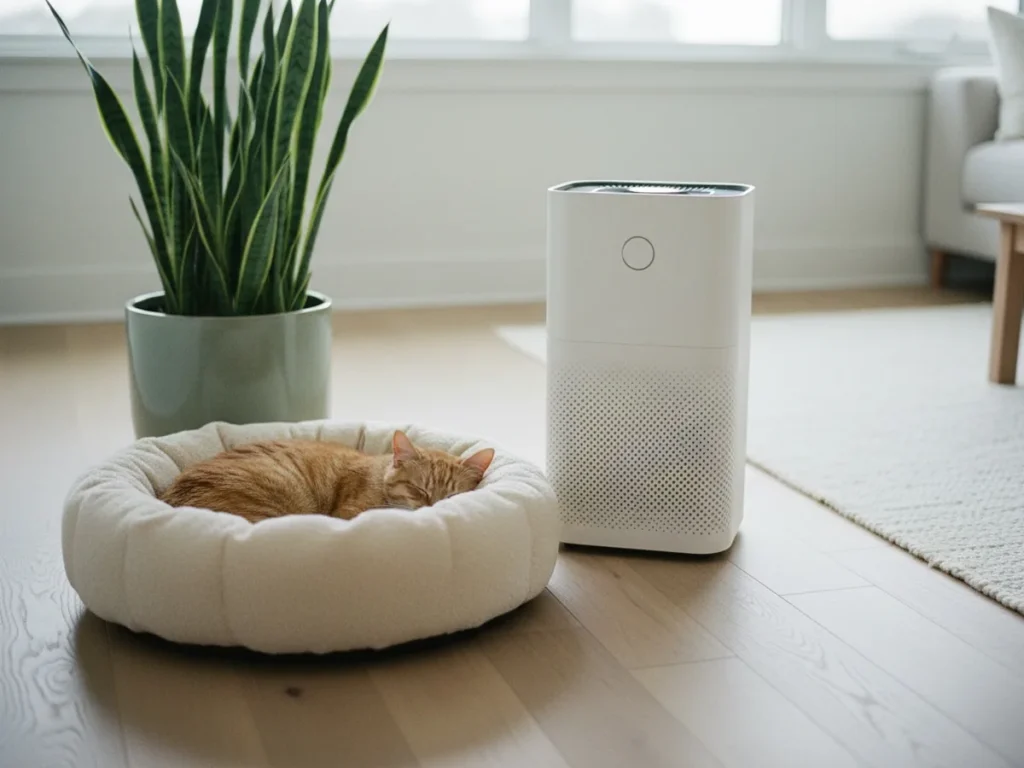
A HEPA air purifier helps with pet allergies by capturing airborne pet dander, the tiny flakes of skin that actually trigger most reactions, but it works best paired with an activated carbon filter for pet odor and with source control. It will not cure a pet allergy, and it cannot reach dander embedded in carpet and furniture, yet it meaningfully lowers the allergen load floating in the rooms where you and your pet spend time.
Key takeaways
– Pet allergies are mainly triggered by dander (and proteins in saliva and urine), much of which becomes airborne.
– A true HEPA filter captures 99.97% of particles at 0.3 microns, including airborne pet dander; add activated carbon for odor.
– Pair the purifier with source control: keep pets out of the bedroom, vacuum with HEPA, and wash bedding.
What actually triggers pet allergies
It is a common misconception that pet hair is the allergen. The real triggers are proteins found in pet dander (shed skin flakes), saliva, and urine, which cling to hair and dust and become airborne. Cat allergens in particular are small and light, so they float for long periods and spread throughout a home. Because these particles are airborne, they are exactly what a HEPA air purifier is built to capture. See air purifiers for cat allergies.
Why HEPA helps
A true HEPA filter captures at least 99.97% of particles down to 0.3 microns, which includes airborne pet dander. Running a properly sized unit continuously in a high-traffic room steadily removes that dander from the air, lowering the concentration you breathe. Allergist guidance, including from the American College of Allergy, Asthma and Immunology, includes HEPA air cleaning as one helpful measure for pet-allergic households.
Add carbon for odor
HEPA captures particles but not gases, so it does not address pet odor on its own. If smell is part of the problem, choose a purifier that combines HEPA with an activated carbon filter, which adsorbs the odor molecules. Many purifiers marketed for pets include both. See HEPA air purifiers for allergies.
What a purifier cannot do
Be realistic about the limits. A purifier cannot remove dander that has already settled into carpet, upholstery, and bedding, which can be a large reservoir, and it cannot eliminate a pet allergy. It only filters the air that passes through it, so it is one layer among several. People with severe pet allergies should not expect a purifier alone to make a home symptom-free.
Combine with source control
The purifier does the most good alongside steps that cut dander at the source: keep pets out of the bedroom so you get allergen-reduced sleep, bathe and groom pets regularly, vacuum frequently with a HEPA vacuum, wash pet bedding and your own bedding in hot water, and use hard flooring or washable rugs where possible. Together these reduce the dander the purifier then has to catch. See air purifiers for allergies and asthma.
FAQ
Do air purifiers help with pet allergies?
Yes. Pet allergies are mainly triggered by airborne dander, and a true HEPA filter captures 99.97% of particles at 0.3 microns, including that dander. A purifier lowers the airborne allergen load, especially when sized to the room and run continuously.
Does an air purifier remove pet odor?
Only if it has an activated carbon filter. HEPA captures particles like dander but not gas-phase odor molecules, so for pet smell choose a unit that combines HEPA with activated carbon.
Will an air purifier cure my pet allergy?
No. It reduces airborne allergens but cannot cure an allergy or remove dander embedded in carpet, furniture, and bedding. It works best as one part of a plan that includes source control.
Where should I place a purifier for pet allergies?
In the rooms where you and your pet spend the most time, with the bedroom a priority for allergen-reduced sleep. Size it to the room and run it continuously for steady dander removal.
What else reduces pet allergens besides a purifier?
Keep pets out of the bedroom, groom and bathe them regularly, vacuum often with a HEPA vacuum, wash bedding in hot water, and favor hard flooring over carpet. These cut dander at the source, which matters more than air cleaning alone.
The bottom line
For pet allergies, a HEPA air purifier is a genuinely useful tool because it captures the airborne dander that triggers symptoms, and adding activated carbon handles odor. Just pair it with source control and realistic expectations, since it complements, rather than replaces, keeping dander down at the source. See air purifiers for cat allergies.