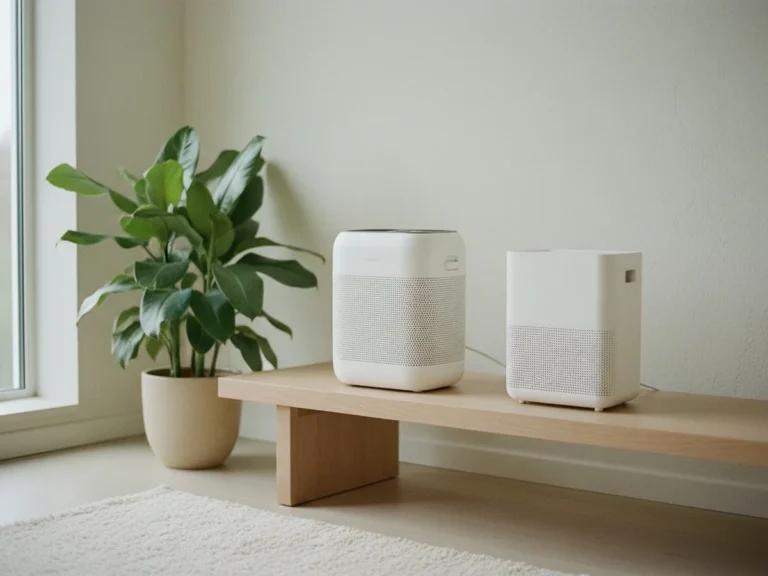
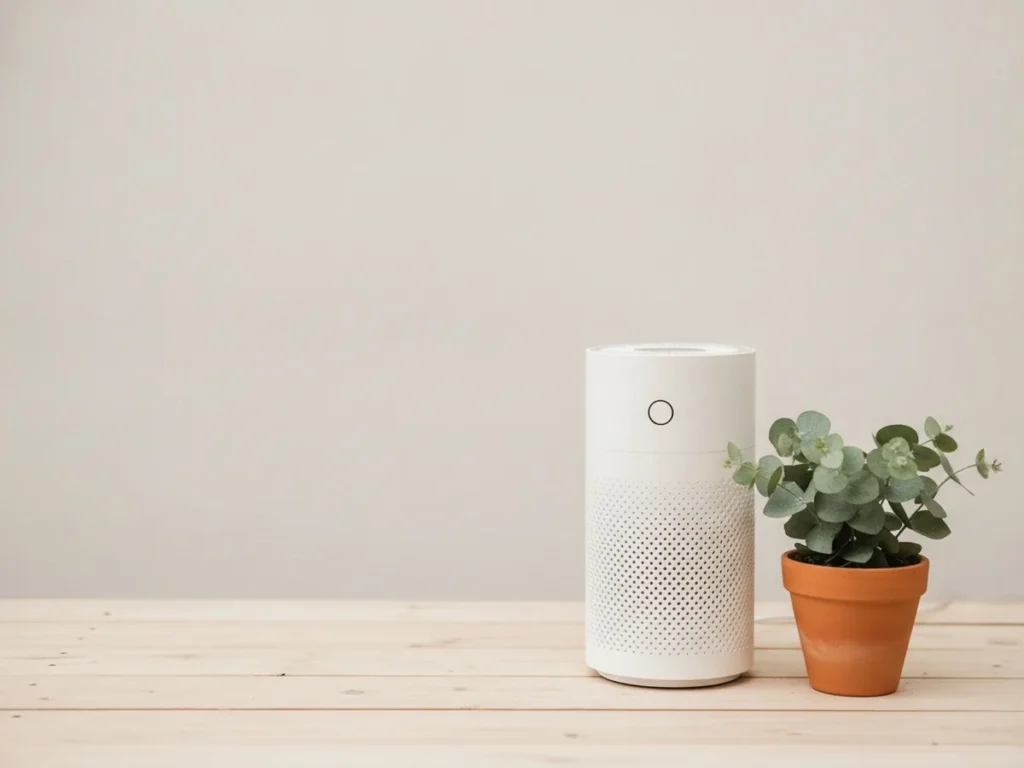
Partly. A good air purifier with a HEPA filter captures airborne mold spores and the musty smell, which can lower the spore count in a room. It does not kill mold growing on your wall and it does not fix the moisture that feeds it. Treat a purifier as backup, not the cure. The fix is finding the leak or damp and cleaning the mold.
Key takeaways
– An air purifier reduces airborne mold spores, it does not remove mold growing on surfaces or fix the cause.
– You need a true HEPA filter to capture spores, plus activated carbon for the musty VOCs that cause the smell.
– Fix the moisture source first. The EPA is clear that controlling moisture is how you control indoor mold. A purifier with the leak still running is a losing battle.
– Size it to the room. Check the CADR and coverage rating against your square footage, an undersized unit on low does almost nothing.
– Skip ozone generators. The EPA states ozone is not safe or effective for cleaning indoor air at concentrations that meet public health standards.
Do air purifiers help with mold?
Short version: yes for the air, no for the wall. A purifier pulls room air through a filter, so the mold spores floating in that air get trapped. Run a properly sized HEPA unit and you genuinely lower the airborne spore count and clear a lot of the musty smell.
What it cannot do is reach the mold colony itself. If there is growth on the bathroom ceiling, the drywall, or behind the washing machine, the purifier never touches it. That mold keeps releasing new spores faster than any filter can keep up, because the real problem is moisture, not air.
This is the part the product listings skip. You can run the best machine on the market and still have a mold problem, because the spores in the air are a symptom. The cause is water.
What to look for in an air purifier for mold
Not every air purifier is built for mold. Here is what actually matters.
- True HEPA filter. This is non-negotiable. A true HEPA filter is rated to capture 99.97 percent of particles at 0.3 microns. Mold spores generally run larger than that, roughly 1 to 20 microns, so a true HEPA filter captures them well. Watch for “HEPA-type” or “HEPA-like” labels, which are not the same standard.
- Activated carbon. HEPA traps the spore particles, but the musty, earthy smell comes from gases called microbial VOCs. Only a carbon stage adsorbs those. A purifier with a meaningful carbon filter clears the odor, HEPA alone does not.
- CADR and room size. Clean Air Delivery Rate (CADR) tells you how fast a unit cleans a given room. Match the CADR and stated coverage area to your square footage. A unit rated for a small bedroom will struggle in an open living area.
- Air changes per hour. For an active mold concern, aim for a unit that can cycle the room’s air several times an hour, not once. That usually means sizing up.
- Sealed system, easy filter swaps. Cheap units leak air around the filter. Look for a sealed design, and check filter cost before you buy, because that is the real running cost.
Filter types compared
| Feature or type | What it does for mold | Worth it? |
|---|---|---|
| True HEPA filter | Captures airborne mold spores (down to 0.3 microns) | Essential, the core of any mold purifier |
| Activated carbon | Adsorbs the musty mVOC gases and odor | Yes, HEPA alone leaves the smell |
| PCO / ionizer / UV add-on | Marketed to “kill” spores in air | Optional, evidence is mixed and some produce ozone |
| Ozone generator | Sold as a mold killer | No, the EPA warns against ozone for occupied spaces |
| Pre-filter | Catches large dust so HEPA lasts longer | Nice to have, extends filter life |
Does it actually help, or not?
A purifier helps as a supporting tool, on two clear conditions.
First, fix the moisture. The US Environmental Protection Agency is direct about this: the way to control indoor mold growth is to control moisture, and mold will not grow without it (EPA, A Brief Guide to Mold, Moisture and Your Home). That means finding and fixing the leak, drying anything that got wet within 24 to 48 hours, and keeping indoor humidity down, the EPA suggests keeping it below about 60 percent (EPA). A dehumidifier often does more for a damp room than a purifier does, because it removes the water that mold needs.
Second, clean what is already growing. A purifier does not remove mold from surfaces. The CDC advises cleaning up existing mold and, for larger areas, says you may need professional remediation (CDC, Mold). For a small patch you can often clean it yourself; the EPA’s guidance is that mold covering more than about 10 square feet may warrant a professional (EPA).
Here is what an air purifier genuinely cannot do:
- It cannot remove the leak, the condensation, or the high humidity feeding the mold.
- It cannot clean mold off drywall, grout, wood, or fabric.
- It cannot stop new spores while a wet colony keeps producing them.
So the honest answer is that a HEPA purifier lowers airborne spores and odor while you deal with the cause, and it is useful during and after cleanup. It is not a substitute for fixing the moisture and removing the growth.
A quick word on ozone: some machines sold for mold are ozone generators. The EPA states ozone is not effective at removing many indoor air pollutants and is not safe at concentrations that meet public health standards (EPA, Ozone Generators Sold as Air Cleaners). Skip them.
Top picks: safer, simpler swaps
We favor straightforward HEPA-plus-carbon units over gadgets with ionizers or ozone. Match the size to your room and pair any of these with a dehumidifier if the space is damp.
- A true-HEPA-plus-carbon purifier sized to your largest room. The simplest reliable choice: real HEPA for spores, a real carbon stage for the musty smell, sized with headroom.
- A compact true-HEPA unit for a bedroom or bathroom. For a single smaller room, a sealed HEPA unit with carbon is plenty, and cheaper to run.
- A dehumidifier to pair with the purifier. The unsung hero. Pulling humidity below 60 percent attacks the cause, not just the symptom.
Some links may be affiliate links. They never change which products we pick.
Related questions
- Air purifier for cat allergies
- Best water filter for home
- Best water filter for PFAS
- Clean water and air at home: what to filter for
FAQ
Do air purifiers help with mold?
Partly. A true HEPA air purifier captures airborne mold spores and lowers the spore count in a room, and activated carbon clears the musty smell. It cannot remove mold growing on surfaces or fix the moisture feeding it, so it works as a backup while you fix the source, not as a cure.
What pulls mold out of the air?
A true HEPA filter does. It is rated to capture 99.97 percent of particles at 0.3 microns, and mold spores are larger than that, so a properly sized HEPA purifier traps them effectively. For the musty odor you also need an activated carbon stage, because HEPA captures particles but not the gases behind the smell.
Will an air purifier get rid of mold in my house?
No, not on its own. It reduces airborne spores but does not remove mold on walls or surfaces, and it does not fix the leak or humidity causing it. The EPA stresses controlling moisture to control mold. Fix the source, clean the growth, then run a purifier as support.
Do air purifiers dry the air?
No. A purifier filters particles and gases from the air, it does not remove humidity. That job belongs to a dehumidifier or air conditioner. Since mold needs moisture, a dehumidifier is often the more useful machine for a damp, mold-prone room, and the two work well together.
Are ozone air purifiers good for mold?
No. The EPA states that ozone is not safe or effective for cleaning indoor air at concentrations that meet public health standards, and it can irritate the lungs. Avoid ozone generators, especially in rooms you occupy. Stick with a sealed true HEPA filter plus activated carbon.
Written by Luc Dossis, founder of Toxlens. Reviewed 2026-06-10. See how we grade the evidence. Some links may be affiliate links, which never change our picks. This is exposure-reduction information, not medical advice.