Yes, some dental floss contains PFAS, but most does not. The problem is concentrated in slick “glide” floss made from PTFE, the same fluoropolymer family as Teflon. Plain nylon, silk, and wax-coated floss are usually PFAS-free. The evidence linking glide floss to PFAS is Moderate.
Key takeaways
– PFAS in floss is mostly a glide-floss problem. PTFE-based “glide” or “easy slide” floss is a fluoropolymer, which is a type of PFAS.
– Independent testing found PFAS in 13 of 39 floss brands (about one third). Most brands tested clean.
– A 2019 human study tied Oral-B Glide use to higher blood levels of one PFAS compound (PFHxS).
– Oral-B reformulated Glide in 2026 and now says none of its floss contains PFAS. Check the package you actually own.
– Nylon, silk, and beeswax or candelilla-wax floss are the simplest PFAS-free swaps.Evidence strength: Moderate. Product testing consistently finds PFAS in some floss, and one human biomarker study links a popular glide floss to a higher body burden of PFHxS. Newer data on whether flossing raises your overall PFAS load is mixed, so this sits below “Strong.”
What the research actually shows
Floss is not uniformly toxic. The data points to a specific kind of floss, and the picture has shifted as brands reformulate.
- Glide-style floss is the main source. The slippery feel of “glide” or “comfort” floss usually comes from PTFE (polytetrafluoroethylene), a fluoropolymer in the PFAS family and chemically the same material as Teflon. Plain waxed or unwaxed nylon floss does not need it.
- Independent testing found PFAS in about a third of brands. A 2022 investigation by Mamavation and Environmental Health News tested 39 floss products and found evidence of PFAS, measured as fluorine, in 13 of them. Levels ranged from 11 parts per million up to 248,900 ppm. Oral-B Glide came in highest at roughly 25 percent fluorine by that measure (EHN/Mamavation, 2022).
- A human study linked glide floss to a higher PFAS body burden. Researchers led by Katie Boronow at the Silent Spring Institute studied 178 women and found that those who used Oral-B Glide had higher blood levels of PFHxS, a long-lasting PFAS. Of 18 floss products they screened, six tested positive for fluorine. It was the first study to connect flossing with a measurable PFAS body burden (Boronow et al., 2019, J Expo Sci Environ Epidemiol).
- Newer data on overall exposure is mixed. A 2025 cross-sectional study of 6,750 U.S. adults found floss users had slightly higher blood PFOA, but lower levels of several other PFAS and a lower overall PFAS burden score. The authors called for a fuller picture rather than assuming floss always raises exposure (Jiao et al., 2025, J Clin Periodontol).
- The biggest brand has now reformulated. As of 2026, Oral-B reports that Glide uses a micro-textured fiber instead of PTFE, and that none of its floss products are made with PFAS (Silent Spring Institute, 2026). This is recent, so an older spool in your bathroom may still be the original formula.
How floss types compare
| Floss type | Typical fiber and coating | PFAS risk | What the evidence says |
|---|---|---|---|
| PTFE “glide” floss | Single PTFE monofilament, naturally slick | Higher | The PFAS-containing category. 2022 testing put one glide product near 25 percent fluorine; 2019 study tied it to higher blood PFHxS |
| Nylon floss (waxed or unwaxed) | Nylon strands, often beeswax or natural wax | Lower | Generally clean in testing, provided it has no synthetic non-stick coating |
| Silk or uncoated floss | Natural silk or bare nylon, no slip coating | Lowest | No fluoropolymer by design; the simplest PFAS-free pick |
How exposure actually happens
PFAS in floss matters because floss sits against your gums, and flossing can cause minor bleeding, which gives chemicals brief direct contact. That said, this is one small exposure route among many. Most PFAS in the average body comes from drinking water, food packaging, and other consumer products, not floss. The 2025 study above is a useful reality check: it did not find that floss users carry a higher overall PFAS load. Switching floss is a low-effort way to trim one source, not an emergency.
Who should care most
- Pregnant and breastfeeding people. PFAS can cross the placenta and appear in breast milk, so reducing avoidable sources during pregnancy is reasonable.
- Anyone working to lower a known high PFAS exposure. If your water or workplace is already a known PFAS source, swapping glide floss is an easy extra step.
- Heavy daily flossers and people with bleeding gums. More contact time and broken skin mean more reason to pick a coating you can verify.
This is exposure-reduction information, not medical advice, and none of it is a reason to stop flossing. Skipping floss carries its own clear oral-health costs.
Safer swaps
Toxlens may earn a commission on some links, at no cost to you. Pick floss that names its materials. “PTFE free” plus a natural wax is the signal you want.
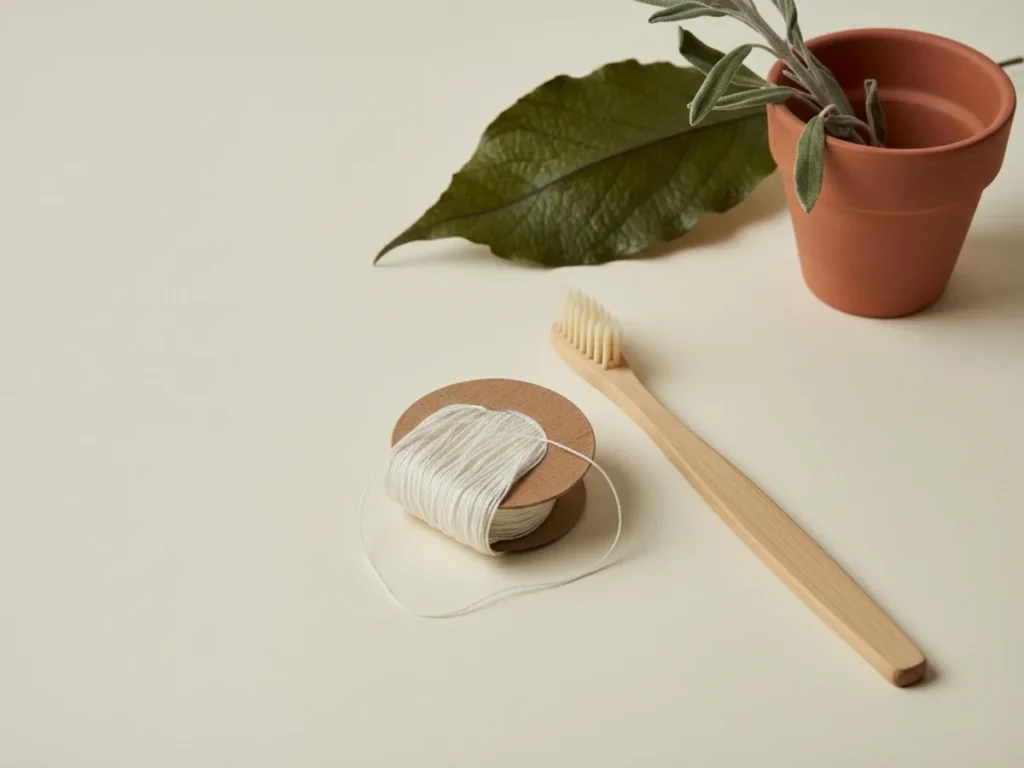
- PFAS-free nylon floss coated with beeswax or candelilla wax. Glides reasonably well without a fluoropolymer coating.
- Silk floss, biodegradable and uncoated. No slip chemistry at all, a good fit if you want the simplest option.
- A water flosser as a complement. Useful for tight contacts where string floss is the usual reason people reach for glide.
Related questions
- What is PFAS and why is it called a forever chemical?
- Do tampons contain PFAS?
- Does dental floss shed microplastics?
- Is nonstick cookware safe?
FAQ
Does all dental floss contain PFAS?
No. PFAS shows up mainly in slick PTFE “glide” floss. In independent testing, PFAS was found in 13 of 39 brands, about one third, so most floss tested clean. Plain nylon, silk, and wax-coated floss are usually PFAS-free.
Does Oral-B Glide have PFAS?
The original Glide was PTFE-based and tested high for fluorine, and a 2019 study tied its use to higher blood PFHxS. As of 2026, Oral-B says it reformulated Glide with a micro-textured fiber and that none of its floss now contains PFAS. Check the package you own.
Which dental floss is PFAS-free?
Floss that lists nylon or silk fiber with a natural coating like beeswax or candelilla wax is generally PFAS-free. Brands that explicitly state “PFAS-free” or “PTFE-free,” such as Tom’s of Maine, Dental Lace, and Cocofloss, are the safest bet over vague “coated for comfort” labels.
Should I be worried about PFAS in floss?
For most people it is a minor source compared with water and food packaging, and a 2025 study did not find floss users had higher overall PFAS. It is still an easy source to remove. The clear advice is to keep flossing and choose a PFAS-free product.
How can I tell if my floss has PFAS?
Read the material, not the marketing. Floss described as “glide,” “easy slide,” or made from PTFE or Teflon is the type to avoid. Floss labeled nylon or silk with beeswax or candelilla wax, or explicitly “PFAS-free,” is the safer choice.
Written by Luc Dossis, founder of Toxlens. Reviewed 2026-06-10. See how we grade the evidence in our methodology. This is exposure-reduction information, not medical advice.