You cannot avoid PFAS completely, since these “forever chemicals” are now in water, soil, and countless products, but you can cut most of your exposure by targeting a few big sources. The biggest levers are your drinking water, nonstick cookware, greasy food packaging, and anything sold as waterproof or stain-resistant. Filtering your water is the single highest-impact step.
Key takeaways
– Drinking water is usually the largest controllable source; a certified filter is the top fix.
– Swap nonstick (Teflon) cookware for cast iron, stainless, or carbon steel.
– Avoid waterproof, stain-resistant, and grease-proof products: rain gear, fast-food wrappers, microwave popcorn.
– There is no proven way to remove PFAS from your body, so lowering new exposure is the whole game.
Fix your water first
For most people, tap water is the largest controllable source of PFAS. Check your local levels through your water utility’s report or the EPA, then install a filter certified to reduce PFAS, look for NSF/ANSI Standard 53 or 58, which covers quality activated-carbon and reverse-osmosis systems. Our guide to a water filter for PFAS covers what to look for. The EPA notes only a small amount of PFAS enters through skin, so filtering what you drink and cook with matters most.
Change how you cook and store food
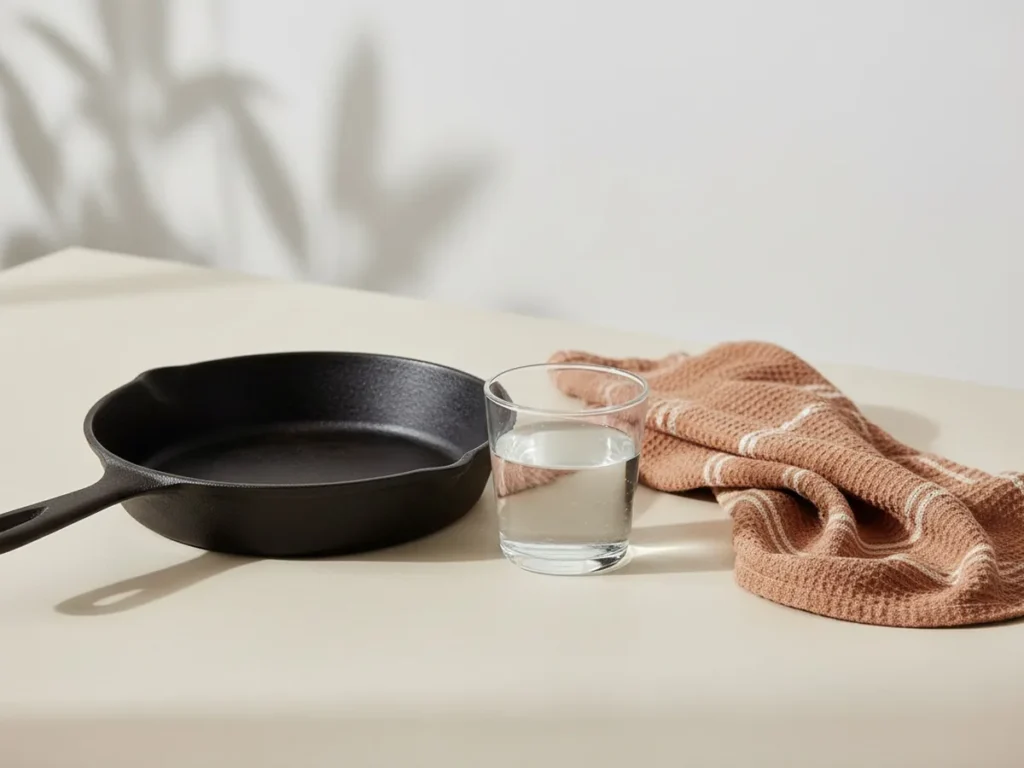
Ditch nonstick cookware. Traditional Teflon-style pans are coated with PFAS (PTFE); replace them with cast iron, stainless steel, or carbon steel. See PFAS in cookware. Skip microwave popcorn, whose bags are heavily PFAS-coated; pop loose kernels instead. Limit greasy takeout and fast food, since wrappers, pizza boxes, and bakery bags are often grease-proofed with PFAS, and move leftovers into glass or metal promptly.
Watch clothing, home goods, and personal care
Avoid buying carpets, furniture, and clothing labeled stain-resistant, grease-resistant, or waterproof, and look for outdoor gear marked PFC-free or “no intentionally added PFAS.” See PFAS in clothes. In the bathroom, choose PFAS-free dental floss (many glide flosses contain PFAS) and skip cosmetics listing ingredients with “PTFE” or “fluoro” in the name.
A realistic note
There is no treatment that removes PFAS already in your body, so the goal is preventing new exposure, not detoxing. You will not reach zero, and that is fine. Hitting water, cookware, and packaging removes the bulk of everyday PFAS for modest effort.
For a category-by-category way to verify what you buy, see our PFAS-free products list.
FAQ
Can you completely avoid PFAS?
No. PFAS are in water, soil, dust, and thousands of products worldwide, so total avoidance is not realistic. You can meaningfully lower your exposure by targeting the biggest sources: drinking water, nonstick cookware, greasy food packaging, and waterproof or stain-resistant goods.
What is the most important step to reduce PFAS?
Filter your drinking water. For most people tap water is the largest controllable source, so a filter certified to NSF/ANSI Standard 53 or 58, such as a quality carbon or reverse-osmosis system, gives the biggest reduction for the effort.
What foods are high in PFAS?
Freshwater fish from contaminated waterways, microwave popcorn, fast food and greasy takeout (from the wrappers), and produce grown in contaminated soil or water tend to be highest. Choosing fresh whole foods and avoiding grease-proof packaging lowers dietary PFAS.
Can you remove PFAS from your body?
There is no proven medical treatment to remove PFAS already in your body. Because they persist, the most effective step is preventing and reducing future exposure through water, food, and product choices.
How do I know if a product has PFAS?
Watch for marketing terms like waterproof, water-repellent, stain-resistant, grease-resistant, and wrinkle-free, which often signal PFAS treatment. On ingredient lists, “PTFE” or anything with “fluoro” indicates fluorinated chemicals. PFAS-free and PFC-free labels are the safer signal.
The bottom line
PFAS are unavoidable in trace amounts, but the big exposures are concentrated. Filter your water, retire the nonstick pans, cut greasy packaging, and skip waterproof or stain-resistant goods, and you remove most of your everyday forever-chemical load.