Yes, the air you breathe carries microplastics, and indoors is where you get most of them. A 2025 study estimated people may inhale up to 68,000 plastic particles a day, mostly at home and in the car, shed from synthetic clothing, furnishings, and dust. The particles are small enough to reach deep into the lungs, and a HEPA filter plus ventilation is the practical defense.
Key takeaways
– A 2025 study estimated up to 68,000 inhaled microplastic particles per day, far above older figures.
– Indoor air holds roughly 8 times more microplastics than outdoor air; car cabins are the worst.
– The fixes are a HEPA air purifier, regular damp dusting and HEPA vacuuming, ventilation, and natural fibers.
How much plastic is in the air
Researchers at the Universite de Toulouse sampled air in homes and cars and estimated adults may inhale as much as 68,000 microplastic particles smaller than 10 micrometers each day, a size able to lodge deep in the lungs (published in PLOS One, 2025). Car cabins were the worst, averaging about 2,238 particles per cubic meter versus roughly 528 in apartment air. Because people in developed countries spend around 90 percent of their time indoors, and indoor air can hold about 8 times more microplastics than outdoor air, your home and car matter more than the outside.
Where indoor airborne plastic comes from
Most of it sheds from synthetic textiles: clothing, upholstery, carpets, curtains, and bedding made from polyester, nylon, and acrylic. It collects in household dust and gets stirred back into the air as you move around. Cars concentrate it because the cabin is small and full of synthetic dashboard, seat, and trim materials. Outdoors adds tire dust and city grime, but indoors is the bigger exposure.
How to breathe in fewer
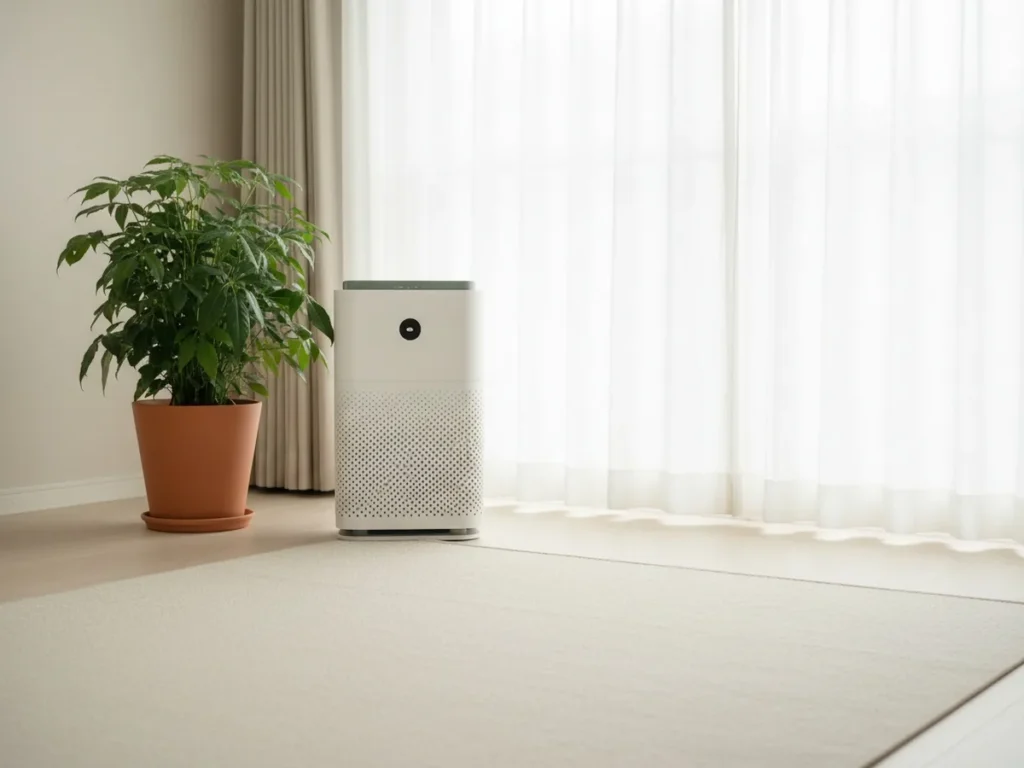
Run a HEPA air purifier in the rooms where you spend the most time; true HEPA filtration captures fine airborne particles. Dust with a damp cloth and vacuum with a HEPA-equipped, sealed vacuum so settled particles are removed rather than kicked back into the air. Ventilate by opening windows, and roll the car windows down at the start of a drive to flush accumulated particles. Choose natural fibers for clothing and furnishings to cut the shedding at its source. For mold or allergy concerns, the same HEPA approach applies; see our guide to the best air purifier for mold.
FAQ
How many microplastics do we breathe in a day?
A 2025 study estimated adults may inhale up to 68,000 microplastic particles smaller than 10 micrometers per day, mostly indoors and in cars. That is far higher than earlier estimates, which had not measured the smallest, lung-penetrating particles.
Is there more microplastic in indoor or outdoor air?
Indoor. Indoor air can contain about 8 times more microplastics than outdoor air, because homes are full of shedding synthetic textiles and furnishings, and people spend roughly 90 percent of their time inside. Car cabins are the most concentrated of all.
Do air purifiers remove microplastics from the air?
Yes, a true HEPA air purifier captures fine airborne particles including microplastics. Running one where you spend the most time, along with regular damp dusting and HEPA vacuuming, meaningfully lowers what you breathe.
Are airborne microplastics harmful?
Particles small enough to reach deep into the lungs can trigger inflammation in lab studies and may carry chemical additives, and researchers are investigating links to respiratory and cardiovascular effects. The long-term risk is not fully established, so the sensible step is to lower exposure where it is easy.
How do I reduce microplastics in my home’s air?
Use a HEPA air purifier, dust with a damp cloth, vacuum with a sealed HEPA vacuum, ventilate by opening windows, and favor natural fibers for clothing, bedding, and furniture. Ventilating your car at the start of a drive helps too.
The bottom line
You breathe microplastics every day, and most of it comes from synthetic textiles and dust inside your home and car, not the outdoors. A HEPA purifier, damp dusting, ventilation, and natural fibers cut the amount you inhale without much effort.