Yes, traditional nonstick cookware is made with PFAS, the coating itself is a fluoropolymer called PTFE (Teflon). In normal, gentle use it is fairly stable, but it releases chemicals and fumes when scratched, flaking, or overheated. The simple fix is to switch to cast iron, stainless steel, or carbon steel, none of which contain PFAS.
Key takeaways
– Conventional nonstick coatings are PTFE, a type of PFAS; PFOA was phased out but PTFE remains.
– Risk rises when pans are scratched, peeling, or heated above about 500°F (260°C).
– Cast iron, stainless steel, and carbon steel are PFAS-free by construction; some states are banning PFAS cookware.
What the coating actually is
The slick surface on a classic nonstick pan is polytetrafluoroethylene (PTFE), which is part of the PFAS family. Manufacturers, including T-fal, confirm that PTFE-coated products contain PFAS chemicals. The older, more notorious compound PFOA was phased out of US production years ago, but the PTFE coating itself is still a fluoropolymer. A 2025 University of North Carolina study and Ecology Center testing found that nonstick and even some undisclosed coatings contribute to PFAS exposure, especially as pans wear.
When it becomes a problem
An intact, lightly used nonstick pan releases relatively little. The risk climbs in two situations. Overheating: above roughly 500°F (260°C), the coating starts to break down and can release fumes that cause temporary flu-like “polymer fume fever” and are notably fatal to pet birds. Damage: scratched, peeling, or flaking pans can shed coating particles into food. So preheating an empty nonstick pan on high, or cooking with a worn one, is where it matters most.
Safer cookware that contains no PFAS
For the full breakdown of safe materials and what to avoid across your whole kitchen, see our guide to non-toxic cookware.
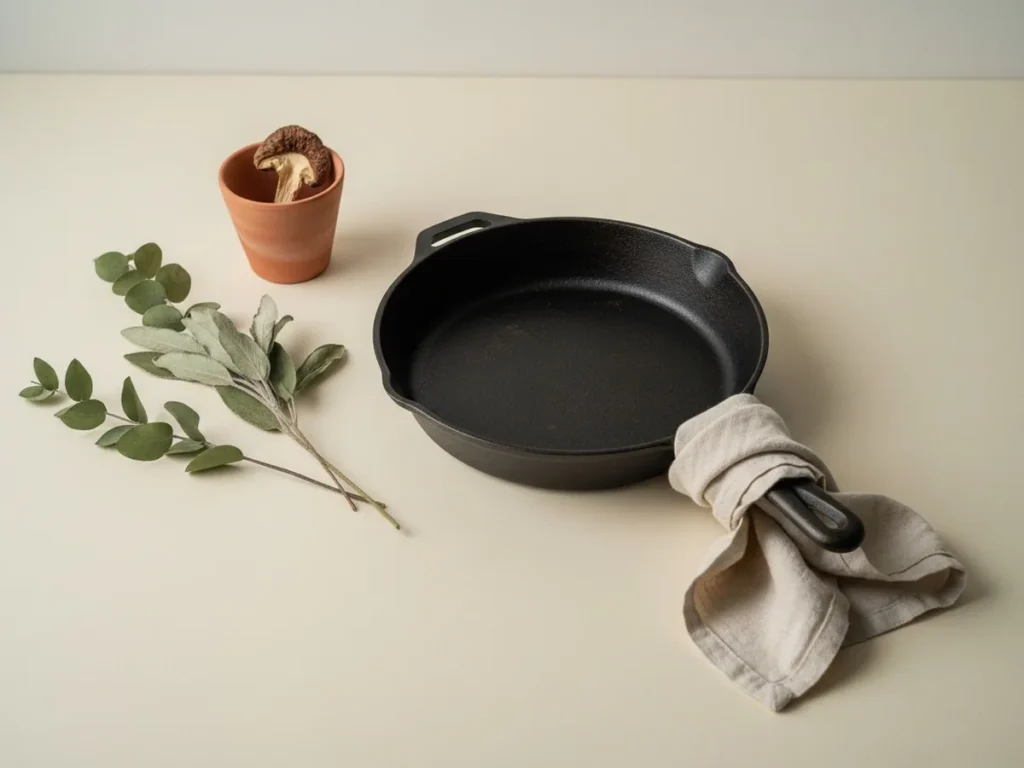
Cast iron becomes naturally nonstick when seasoned and lasts for decades. Stainless steel will not flake or leach and is ideal for searing. Carbon steel is cast iron’s lighter cousin with similar performance. Enameled cast iron and glass are also PFAS-free. If you keep a nonstick pan, use low to medium heat, never preheat it empty, use wood or silicone utensils, and replace it the moment it scratches. For the wider plan, see how to avoid PFAS.
A note on “ceramic” nonstick
Ceramic nonstick pans are usually metal pans coated with a sol-gel material and are often PFAS-free, but coatings vary and some still contain trace fluoropolymers, so confirm a PTFE-free, PFOA-free, PFAS-free label with the manufacturer rather than assuming.
FAQ
Is all nonstick cookware made with PFAS?
Traditional nonstick coatings (Teflon-style) are PTFE, which is a PFAS. Some newer ceramic-coated pans are PFAS-free, but labels vary, so check for a PTFE-free, PFOA-free, PFAS-free statement. Cast iron, stainless, and carbon steel contain no PFAS by construction.
Is it safe to cook with a nonstick pan?
An intact, lightly used pan at low to medium heat releases relatively little. The concern is overheating above about 500°F or cooking with a scratched, peeling pan, which can release fumes or shed coating into food. Replace damaged nonstick pans.
At what temperature does Teflon release toxic fumes?
Around 500°F (260°C) and above the PTFE coating begins to degrade and can release fumes that cause temporary flu-like symptoms in people and are fatal to pet birds. Avoid preheating an empty nonstick pan or using it on high heat.
What cookware is PFAS-free?
Cast iron, stainless steel, carbon steel, enameled cast iron, and glass are PFAS-free by construction. Some ceramic nonstick pans are also PFAS-free, but confirm with the manufacturer since coatings differ and a few contain trace fluoropolymers.
Should I throw out my nonstick pans?
Not necessarily if they are intact and you use low to medium heat. Definitely replace any that are scratched, peeling, or flaking. When you do upgrade, cast iron, stainless, or carbon steel removes the issue entirely.
The bottom line
Nonstick means PTFE, which is a PFAS, and the danger shows up when pans are overheated or damaged. Cook gently on the nonstick you have, replace it once it scratches, and move toward cast iron, stainless, or carbon steel to take PFAS out of your kitchen for good.