The word “ceramic” hides two completely different products, and that single overlap is why this question is so confusing.
So, is ceramic cookware safe? In short: yes, with one important distinction. Solid ceramic cookware (made entirely from fired clay) is inert and among the safest materials you can cook in. “Ceramic nonstick” is a different thing entirely: a thin mineral coating sprayed onto a metal pan. It is genuinely free of the PFAS chemicals found in older nonstick, but the coating wears out in a few years and is not the same as a solid ceramic pot. A third category, glazed or decorative ceramic, is where the real safety concern (lead and cadmium) actually lives. Knowing which one you own answers almost every safety question. For the full picture across materials, see our guide to non-toxic cookware.
Key takeaways
- “Ceramic” means two products. Solid 100% ceramic (fired clay) is inert and very safe. “Ceramic nonstick” is a sol-gel coating on metal that is PFAS-free but temporary.
- Ceramic nonstick coatings wear out. Most lose their easy release in 1 to 3 years, faster with high heat, metal utensils, and dishwashers.
- The real risk is lead and cadmium in glazes, mostly in imported, antique, handmade, or decorative pieces. The FDA enforces leach limits using a 24-hour, 4% acetic acid test.
- Acidic foods leach the most. Citrus, tomato sauce, coffee, and wine pull more metal from a questionable glaze than neutral foods do.
What is the difference between solid ceramic and ceramic nonstick?
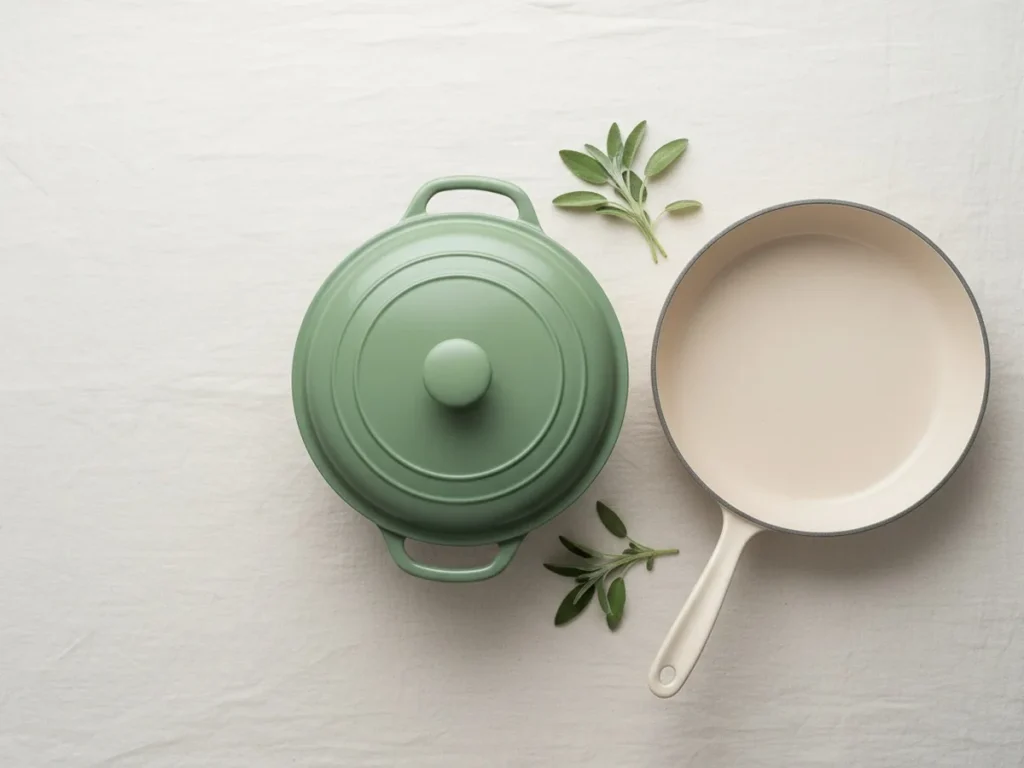
Solid ceramic cookware is made entirely from clay and minerals, shaped and fired at very high temperatures (often above 2,000°F), then glazed. There is no metal core and no sprayed-on coating. Think of a clay Dutch oven, a stoneware baking dish, or a Mexican cazuela. Once fired and properly glazed, the surface is glass-like and chemically inert, so it does not react with food.
“Ceramic nonstick” is marketing shorthand for a metal pan (usually aluminum) coated with a sol-gel layer. According to the American Ceramic Society’s 2023 explainer on ceramic-coated cookware, that coating is a sprayed mixture of silica, metal oxides, and binders, fired at a relatively low 400°F to 800°F. It is sometimes called “quasi-ceramic” because it behaves nothing like a solid fired-clay pot. The key point: it is a thin surface treatment, not the body of the pan.
| Type | What it is | Safety | Best for | Watch out for |
|---|---|---|---|---|
| Solid ceramic | 100% fired clay, glazed, no metal core | Very safe if lead-free glaze; inert and durable | Slow cooking, baking, braising, serving | Heavy; can crack from thermal shock; verify the glaze on imported/handmade pieces |
| Ceramic nonstick | Sol-gel silica coating on a metal pan | PFAS-free; safe while intact | Eggs, low-fat cooking, easy cleanup | Coating wears out in 1 to 3 years; no metal utensils, no high heat, no dishwasher |
| Glazed / decorative | Imported, antique, handmade, or ornamental ware | Risk of lead and cadmium leaching | Display only, unless verified food-safe | Acidic foods accelerate leaching; “not for food use” pieces should not hold food |
Is ceramic coating safe and PFAS-free?
Yes, ceramic sol-gel coatings are made without PFAS (the “forever chemicals”) and without PTFE, the material used in traditional Teflon-style nonstick. This is the main reason ceramic nonstick became popular among people trying to cut down on PFAS exposure. If you want the background on why that matters, see PFAS in cookware and our plain-language explainer on what PFAS are.
One honest caveat: the American Ceramic Society notes that some ceramic-coated pans may use titanium dioxide nanoparticles and proprietary organic binders, and the long-term behavior of these once the coating starts to break down is not fully characterized. That is a reason to replace a worn ceramic pan rather than keep cooking on a scratched, flaking surface. It is not a reason to fear an intact, reputable pan.
How long does ceramic nonstick cookware last?
Less time than people expect. The trade-off for being PFAS-free is durability: ceramic sol-gel surfaces lose their slickness faster than PTFE does. In real-world use, most ceramic nonstick pans keep good food release for roughly 1 to 3 years. The lifespan depends almost entirely on how you treat them.
Three things shorten a ceramic pan’s life dramatically: high heat (the coating is happiest at low to medium), metal utensils (which scratch the surface), and the dishwasher (whose detergents and high-pressure jets strip the coating). Treat a ceramic pan gently, with silicone or wooden tools, medium heat, and hand-washing, and you get years from it. Abuse it and it can be done in well under 18 months. Because the coating is what does the work, a worn ceramic pan is not dangerous so much as simply ineffective: time to recycle it and replace it.
How much lead is in ceramic cookware?
This is where the genuine safety story lives, and it is about glaze, not the clay. Lead and cadmium have historically been used in ceramic glazes and colored decorations to create bright finishes and lower firing temperatures. If a glaze is improperly formulated or under-fired, those metals are not locked into the glass and can leach into food.
In the United States, the FDA regulates this. Under Compliance Policy Guide 545.450, the agency tests ceramicware by leaching it for 24 hours in a 4% acetic acid solution (a stand-in for acidic food) and sets action levels that get stricter for items that hold liquid longer: roughly 3.0 micrograms per milliliter for flat plates, down to 0.5 micrograms per milliliter for cups, mugs, and pitchers. The Environmental Defense Fund reported in 2023 that the FDA considers cookware showing any leachable lead to be prohibited, a tighter standard than for tableware.
The risk concentrates in specific pieces, not in mainstream factory cookware. A peer-reviewed study by R.W. Sheets, published in Science of the Total Environment in 1999, tested newly purchased imported dinnerware and found that 2 of 28 ceramic patterns exceeded FDA lead limits, with 10 more exceeding California’s stricter Proposition 65 level. One decorative ceramic plate released lead at concentrations above 2,000 micrograms per milliliter. Modern, reputable cookware sold by major brands is generally lead-safe, but imported, antique, handmade, highly decorated, and bright-colored or hand-painted pieces deserve more caution.
How can I tell if my ceramic is safe to use?
You cannot judge lead content by looking, but you can use sensible rules. The FDA’s guidance on traditional pottery warns that ornamental and decorative ceramicware can be hazardous if used for food, which is why such pieces are required to carry a permanent molded or painted warning such as “Not for Food Use.” If a piece says that, believe it, and keep it on a shelf rather than at the dinner table.
For everyday use, favor pieces from established manufacturers that state their products are lead-free and meet FDA standards. Be more cautious with antiques, items bought while traveling, handmade or craft-fair pottery of unknown origin, and brightly decorated surfaces (especially where the decoration is on the food-contact side). If you want certainty for a specific suspect piece, a lab leach test is the only definitive answer; consumer swab kits can flag obvious problems but can miss lead that only releases under acidic conditions.
Does acidic food make ceramic less safe?
It can, if the glaze is already a problem. The FDA’s own test uses acetic acid precisely because acidity is what drives metals out of a flawed glaze. Acidic foods and drinks such as tomato sauce, citrus, coffee, wine, and soda pull more lead or cadmium from a questionable surface than neutral foods do, and storing acidic food in a suspect piece for long periods is worse than brief contact.
With a verified lead-free modern pan or a properly glazed solid ceramic dish, this is a non-issue: there is essentially nothing to leach. The acidic-food caution applies to the questionable category, not to inert, food-safe ceramic. If your broader goal is cutting exposure across the kitchen, our guide on how to avoid PFAS pairs well with the lead precautions here.
Frequently asked questions
Is ceramic cookware safer than Teflon?
For PFAS exposure, ceramic nonstick has an edge: its sol-gel coating is made without PFAS or PTFE, while traditional nonstick is PTFE-based. The trade-off is durability, since ceramic coatings typically last 1 to 3 years versus longer for well-maintained PTFE. Both are considered safe while the coating is intact and undamaged.
Do ceramic pans have lead in them?
Reputable modern ceramic nonstick pans are made to be free of leachable lead, and the FDA treats any leachable lead in cookware as prohibited. Lead is mainly a concern in glazed, imported, antique, handmade, or decorative ceramic dishware, not in mainstream sprayed-coating cookware from established brands.
How do I know when to replace my ceramic pan?
Replace a ceramic nonstick pan when food starts sticking despite proper use, or when you see scratching, dulling, chipping, or flaking of the coating. A worn pan is not toxic, just no longer nonstick, and cooking on a flaking surface is worth avoiding. Most pans reach this point within 1 to 3 years.
Is solid ceramic cookware completely safe?
Solid, fully fired ceramic with a proper lead-free glaze is inert and among the safest cookware materials, since it does not react with food. The only real caveats are verifying the glaze on imported, antique, or handmade pieces, and handling it carefully because it can crack under sudden temperature changes.
Can I cook acidic foods like tomato sauce in ceramic?
In a verified lead-free modern pan or a properly glazed solid ceramic dish, yes, with no meaningful concern. Caution applies only to questionable glazed, decorative, or unverified pieces, because acidity (the basis of the FDA’s 4% acetic acid leach test) draws more metal out of a flawed glaze.
The bottom line
Ceramic cookware is safe once you know which “ceramic” you are holding. Solid fired-clay ceramic with a sound, lead-free glaze is inert and excellent. Ceramic nonstick is a legitimately PFAS-free choice that simply does not last as long, so plan to replace it every few years and treat it gently. The one place to stay genuinely alert is glazed, imported, antique, handmade, or decorative ware, where lead and cadmium can leach (especially into acidic food), which is exactly why the FDA enforces a 4% acetic acid leach test and requires decorative pieces to be labeled “not for food use.” Buy from reputable makers, keep ornamental pottery off the table, and you can cook in ceramic with confidence. For how ceramic stacks up against stainless steel, see our comparison of stainless steel vs ceramic cookware.