Yes, plastic and “silken” tea bags shed microplastics. A single plastic tea bag steeped at brewing temperature can release billions of micro and nanoplastic particles into your cup. Paper bags and loose-leaf tea shed far less. The evidence that plastic bags release these particles is Moderate.
Key takeaways
– One plastic tea bag at 95 degrees C (203 F) released about 11.6 billion microplastics and 3.1 billion nanoplastics into a single cup (Hernandez et al., 2019).
– The “silken,” mesh, and pyramid bags are the worst offenders. They are usually nylon, PET, or PLA plastic, not silk.
– Heat-sealed paper bags can also contain a thin plastic layer. Plain string-and-tag paper bags and loose-leaf tea are the low-shedding options.
– A 2024 study showed these particles can be absorbed by human intestinal cells in the lab (Banaei et al., 2024).
– The particles are confirmed; the long-term health effect in people is not yet quantified. The sensible move is to switch bags, not to quit tea.Evidence strength: Moderate. Consistent lab measurements show plastic bags shed particles, and human-cell studies show the particles can be taken up. What is not settled is the disease risk in real drinkers, so we treat this as a cheap, easy exposure to cut, not a proven harm.
Do all tea bags have microplastics?
No, and this is the part most headlines skip. The amount depends almost entirely on what the bag is made of. The “billions of particles” number comes from one specific kind: the smooth, see-through “silken” or mesh pyramid bag premium brands use. Those are plastic, usually nylon or PET, even when the box says silk.
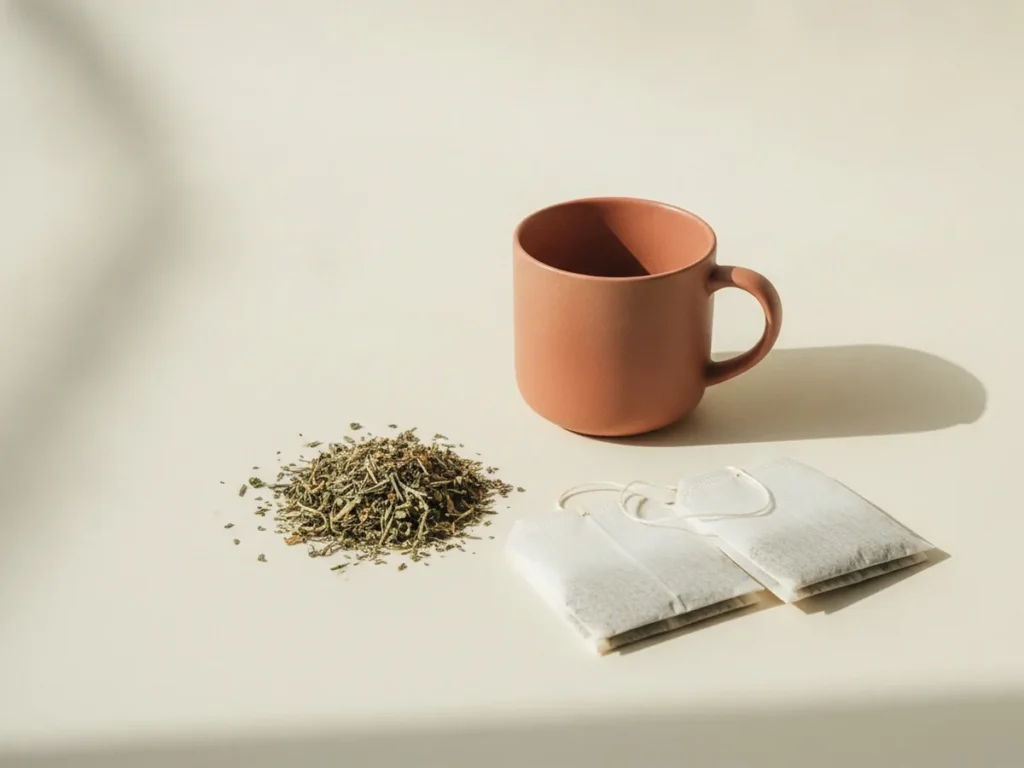
Plain paper bags are different. Many are still sealed with a thin plastic glue, so they are not zero, but they release far less. Loose-leaf tea in a steel or glass strainer adds no bag plastic at all. The honest answer: some bags are a real source, some are barely one, and the label rarely tells you which.
What the research actually shows
The lab work is consistent: heat plus a plastic bag equals a lot of released particles. What is still open is what that does to a person over years.
- One plastic bag, billions of particles. Researchers at McGill University steeped empty plastic tea bags at 95 degrees C and measured roughly 11.6 billion microplastics and 3.1 billion nanoplastics released into a single cup. The particles matched the nylon and PET the bags were made of. The authors noted this was orders of magnitude higher than plastic levels found in other foods (Hernandez et al., Environmental Science and Technology, 2019; PMID 31552738).
- The particles can enter human cells. A 2024 study from the Autonomous University of Barcelona brewed nylon, polypropylene, and cellulose bags and showed, for the first time, that the released micro and nanoplastics can be taken up by human intestinal cells in the lab, with the highest uptake in mucus-producing cells (Banaei et al., Chemosphere, 2024).
- A research review urges caution, not panic. A 2023 review of tea-bag microplastics concluded the exposure is real and worth reducing, while stating plainly that the long-term human health consequences are still uncertain (Foods, 2023; PMID 36927815).
- There may be added chemicals, too. A separate 2023 analysis found plasticizers called phthalates (including DEHP) in some tea bags, and estimated that a daily cup could deliver hundreds of microplastic items along with them (Environmental Science and Pollution Research, 2023; PMID 37697202).
For early effects, the McGill team exposed water fleas (Daphnia) to the particles. The fleas survived but showed some anatomical and behavioral changes (Hernandez et al., 2019). That is an animal hint, not proof of human harm, which is why we land on “switch the bag” rather than “tea is dangerous.”
How tea bag types compare
| Tea bag type | Made of | Microplastic shedding | What to know |
|---|---|---|---|
| “Silken” / mesh / pyramid | Nylon, PET, or PLA plastic | High | The source of the “billions of particles” finding. Looks premium, is plastic. |
| Heat-sealed paper (no staple) | Paper plus a thin plastic seal | Low to moderate | The sealed edge usually means some plastic. Better than silken, not plastic-free. |
| String-and-tag paper (stapled or folded) | Paper, no heat seal | Low | Among the lower-shedding bagged options. |
| Loose leaf in steel or glass strainer | No bag at all | None from a bag | Zero bag plastic. The cleanest choice. |
How exposure actually happens
The exposure is simple: hot water plus a plastic bag releases particles, and you drink them. Heat is the trigger, so a near-boiling brew with a silken bag is the high end, and a quick warm steep with a paper bag is much lower.
The dose adds up over a habit, not one cup. One analysis estimated a routine daily tea could deliver several hundred microplastic items plus trace plasticizers (PMID 37697202). Whether that changes anything over years is the open question. The exposure itself is one of the easier ones to cut, because the fix is just a different bag.
Who should care most
This is exposure-reduction information, not medical advice. A few groups may reasonably want to be more careful:
- Pregnancy and infants. Developing systems are generally treated with extra caution around any novel exposure. Loose leaf or plain paper bags are an easy swap.
- Daily heavy tea drinkers. Several plastic-bagged cups a day puts you at the higher-exposure end, so the swap matters more than for an occasional drinker.
- Anyone reducing total microplastic load. If you already filter your water and avoid plastic in the microwave, tea bags are a cheap, obvious next step (UCSF).
None of this means tea is unsafe. It means the bag, not the tea, is the part worth changing.
Safer swaps
If you want the tea without the bag plastic, these are the practical moves:
- Loose-leaf tea with a stainless steel or glass infuser. No bag, so no bag-derived particles. The cleanest option and usually cheaper per cup.
- Unbleached plain paper tea bags (no heat seal). Look for “plastic-free” and string-and-tag or fold-and-staple closures rather than silken or pyramid bags.
- A reusable cotton or organic muslin tea bag. Fill it with your own loose leaf and wash between uses.
Toxlens may earn a commission from links in this section, at no cost to you. We only suggest swaps we would use ourselves.
Related questions
- How to avoid microplastics: the practical guide
- Microplastics in bottled water: how much, and what to do
- Does silicone have microplastics?
- How to filter microplastics from your water
FAQ
Do all tea bags have microplastics in them?
No. Smooth “silken,” mesh, and pyramid bags are usually plastic (nylon or PET) and shed the most. Many plain paper bags use a thin plastic seal and shed far less. Loose-leaf tea brewed in a steel or glass strainer has no bag plastic at all.
Which tea bags are plastic free?
Plain, unbleached paper bags that are stapled or folded rather than heat-sealed are the closest to plastic-free, though some still use a light plastic glue. The only truly bag-plastic-free option is loose-leaf tea in a reusable steel, glass, or cotton infuser.
Should I stop drinking tea because of microplastics?
No. The particles come from the bag, not the tea. Researchers have confirmed plastic bags shed billions of particles in hot water, but the long-term health effect in people is not yet quantified. Switching to loose leaf or paper bags cuts the exposure without giving up tea.
What is the safest tea bag to use?
Loose-leaf tea in a stainless steel or glass strainer is the safest, since there is no bag to shed plastic. If you want the convenience of a bag, choose plain paper bags labeled plastic-free, and avoid the smooth silken or pyramid bags, which are plastic.
How do you flush microplastics out of your body?
There is no proven detox or flush for microplastics. The body clears some on its own, and no supplement or cleanse is shown to remove them. The reliable approach is to reduce how much you take in, and tea bags are one of the easier sources to cut.
Written by Luc Dossis, founder of Toxlens. Reviewed 2026-06-10. See how we grade the evidence in our methodology. This is exposure-reduction information, not medical advice.