
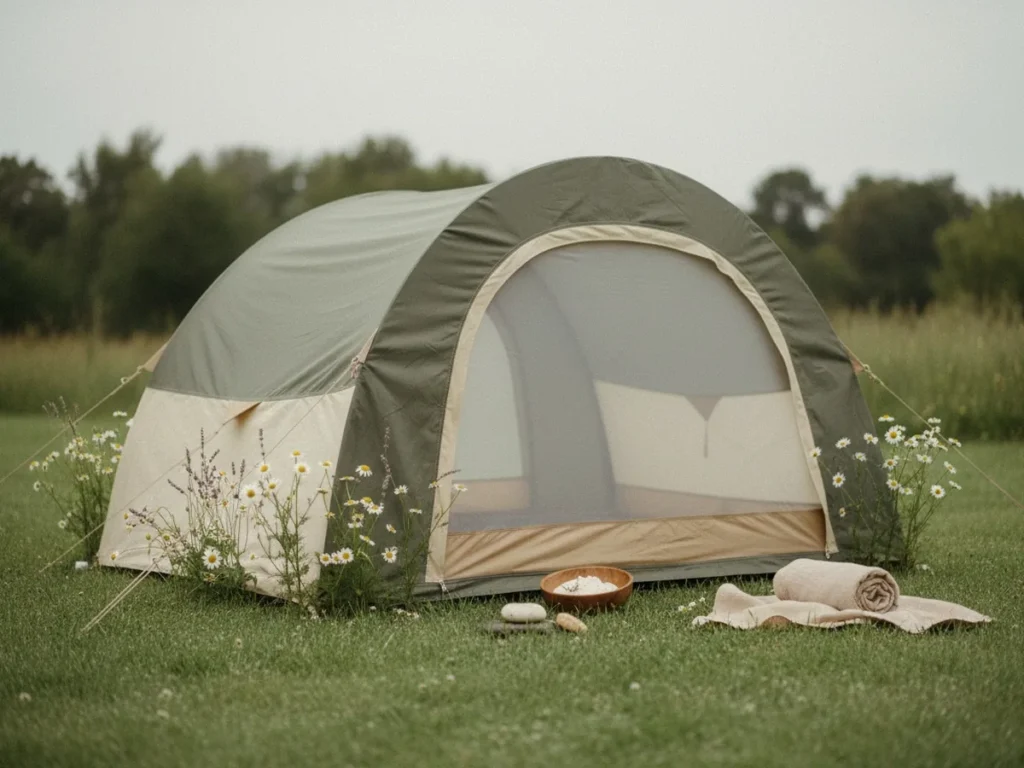
Yes, tents have traditionally used PFAS, both in the water-repellent coating and sometimes in flame retardants, but a tent is a low personal-exposure source and most major brands have now phased PFAS out. You do not eat or drink your tent, so the realistic move is simply to choose a PFAS-free model when you buy and skip PFAS sprays when you re-waterproof.
Key takeaways
– PFAS appear in tents mainly as the durable water-repellent (DWR) finish, and historically in flame retardants.
– Personal exposure from a tent is low because there is no ingestion route; the bigger story is environmental and manufacturing.
– Most major brands (REI, Big Agnes, NEMO, MSR, Kelty) now offer PFAS-free or PFC-free DWR; look for that label and re-treat with a PFAS-free spray.
Why PFAS are in tents
Tents need to shed rain, so manufacturers coat the fly and floor with a durable water-repellent (DWR) finish. For decades the most effective DWR chemistry used long-chain PFAS. Some tents also carried flame-retardant treatments to meet old flammability standards, and certain flame retardants were PFAS-based too. Both uses put PFAS into the fabric you sleep under.
How much exposure does a tent actually cause
This is where context matters. Unlike cookware or drinking water, a tent has no direct route into your body: you are not ingesting the coating, and casual skin contact with a treated fly is a minor pathway. The larger concern with PFAS-treated gear is environmental, the chemicals shed during manufacture, washing, and disposal, and the exposure to workers. So a PFAS tent is more an environmental choice than an acute personal-health one.
Which brands have gone PFAS-free
The outdoor industry has moved fast here. REI began phasing out long-chain PFAS years ago and set supplier requirements to eliminate added PFAS from its products. Big Agnes uses a PFAS-free water repellent across much of its tent line, NEMO markets PFAS-free fabrics, and Kelty, Coleman, and MSR have shifted toward PFAS-free or no-intentionally-added-PFAS DWR. When shopping, look for explicit “PFAS-free” or “PFC-free DWR” language on the product page.
What to look for when buying
Two labels matter. First, a PFAS-free or PFC-free durable water-repellent finish. Second, a tent that meets newer flammability approaches without added flame-retardant chemical treatments, often described as “no added flame retardants.” Many states have moved away from the old flammability rules that drove those treatments, so newer tents are more likely to skip them.
What about your current tent
There is no reason to throw out a tent you already own; the exposure is low and a usable tent kept in service beats a new one made. When the DWR wears off and water stops beading, re-treat it with a PFAS-free waterproofing product such as Nikwax or a Gear Aid Revivex PFAS-free formula rather than an older fluorinated spray. That keeps it waterproof without adding new PFAS.
Sleeping bags carry the same water-repellent chemistry. See PFAS in sleeping bags for how to choose PFAS-free gear.
FAQ
Do tents contain PFAS?
Traditionally yes, mainly in the durable water-repellent (DWR) coating that makes the fly shed rain, and historically in flame-retardant treatments. Many newer tents from major brands now use PFAS-free DWR instead.
Is a PFAS tent dangerous to sleep in?
The personal risk is low. Unlike food or water, a tent has no ingestion route, and casual contact with the treated fabric is a minor exposure pathway. The bigger concern with PFAS-treated gear is environmental and occupational, not nights spent camping.
Which tent brands are PFAS-free?
REI, Big Agnes, NEMO, Kelty, Coleman, and MSR have all moved toward PFAS-free or no-intentionally-added-PFAS water repellents across much of their tent lines. Check the specific product page for “PFAS-free” or “PFC-free DWR” language, since not every model has converted.
Should I replace my old tent because of PFAS?
No. The exposure from a tent is low, and keeping a working tent in use is the more sustainable choice. When its water repellency fades, re-treat it with a PFAS-free waterproofing spray rather than buying new.
How do I re-waterproof a tent without PFAS?
Use a PFAS-free durable water-repellent product such as Nikwax or a PFAS-free Gear Aid Revivex formula. Clean the fly, apply per the instructions, and you restore water beading without adding fluorinated chemicals.
The bottom line
Tents have historically contained PFAS in their waterproofing and flame retardants, but it is one of the lower-priority exposures because there is no path into your body. Spend your attention on water and cookware first, and when you do buy a tent, simply choose a PFAS-free model and re-treat it with a PFAS-free spray. See how to avoid PFAS.