Walk down the cookware aisle and almost everything is labeled “nontoxic” or “PFAS-free,” yet most of it still relies on a coating that wears off within a few years. Non-toxic cookware is cookware that will not leach harmful chemicals or metals into your food during normal cooking. In practice that means choosing pans made from stable, well-understood materials (stainless steel, cast iron, carbon steel, glass, and genuine ceramic) and avoiding conventional nonstick coatings, cheap glazed ceramics that can contain lead, and bare reactive aluminum.
The short version: the safest everyday cookware is uncoated stainless steel and cast iron. Both have decades of use behind them, no coating to wear off, and nothing that breaks down at cooking temperatures. Everything below explains why, where each material fits, and how to build a safe kitchen without overspending.
Key takeaways
- The safest everyday cookware is uncoated stainless steel and cast iron: no coating to wear off and nothing that breaks down at cooking heat.
- Avoid scratched traditional nonstick (PTFE), which can shed PFAS particles, and untested glazed ceramic, which can leach lead into acidic food.
- “Ceramic” means two different things: solid ceramic is very safe, while ceramic nonstick coating is PFAS-free but wears out in one to three years.
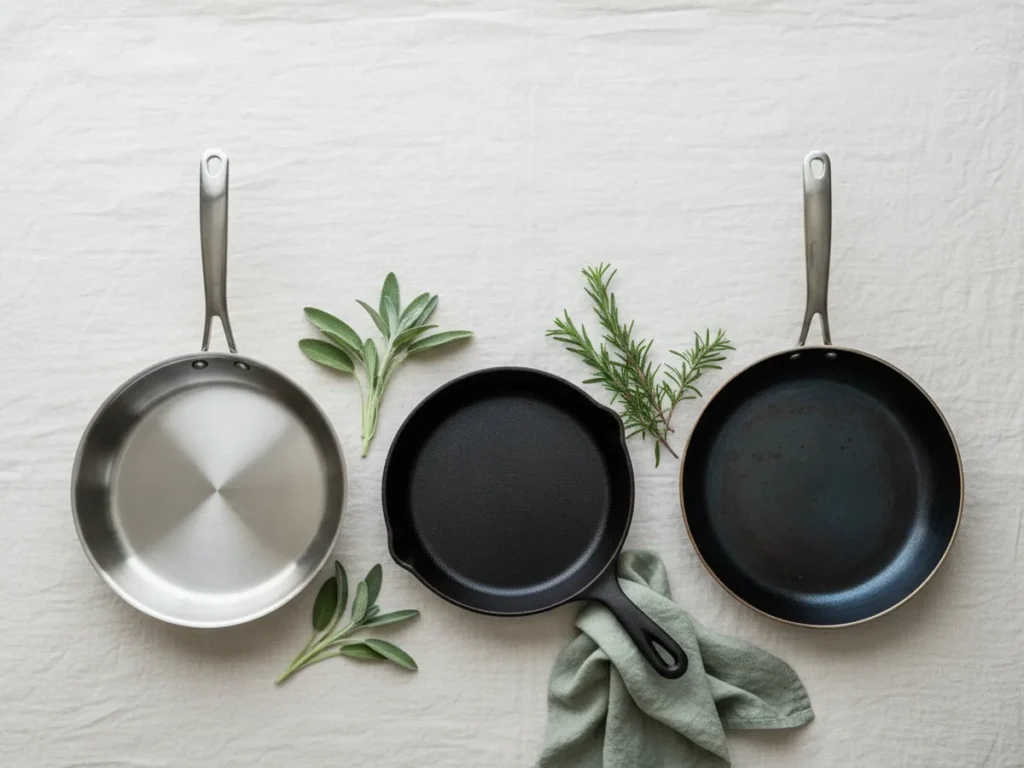
- You only need three or four pieces: a clad stainless pan, a seasoned cast iron or carbon steel pan, an enameled Dutch oven, and glass for baking.
What makes cookware “toxic” in the first place?
Three things turn an ordinary pan into something worth worrying about.
Nonstick coatings. Most traditional nonstick pans are coated with PTFE, a fluoropolymer in the PFAS family. The coating itself is inert when intact, but it degrades when overheated and sheds particles once it is scratched. A 2022 study in the journal Science of the Total Environment found that a single scratch in a Teflon-style coating can release roughly 9,100 plastic particles into food. Older pans were also made with PFOA, which the EPA phased out through its PFOA Stewardship Program (Teflon has been PFOA-free since 2013) after the C8 Science Panel reported probable links between PFOA exposure and conditions including high cholesterol, thyroid disease, and testicular and kidney cancer. We cover this in detail in our guide to PFAS in cookware.
Lead and cadmium in glazes. Some imported or decorative glazed ceramic and enamel cookware contains lead or cadmium in the glaze, which can leach into acidic foods like tomato sauce and citrus. The FDA tests ceramicware for leachable lead using a 4% acetic-acid soak precisely because acidic food pulls more lead out of a glaze, and it notes that glazes fired at inadequate temperatures leach the most. Reputable brands test to those limits and to California Proposition 65, but unbranded, antique, or handmade pieces are a real risk.
Reactive metals. Bare aluminum and unlined copper react with acidic ingredients like tomatoes and citrus, leaching measurable amounts of metal into the food and giving it a metallic taste. This is why quality versions are always anodized, clad, or lined.
The safest non-toxic cookware materials
There is no single “best” material. The safest kitchen uses two or three of these, matched to the job. Here is how the common options compare at a glance. For the materials ranked by safety, see our guide to the safest cookware material.
| Material | Non-toxic? | Best for | Watch out for |
|---|---|---|---|
| Stainless steel | Yes, no coating | Everyday cooking, searing, sauces | Delicate eggs without enough fat or preheating |
| Cast iron | Yes | Searing, baking, natural nonstick | Weight; needs seasoning and drying |
| Enameled cast iron | Yes, if lead-tested | Braises, soups, stews | Chipped enamel; cheap untested brands |
| Solid ceramic | Yes | Baking, slow cooking | Not the same as “ceramic nonstick” |
| Carbon steel | Yes | High-heat frying, stir-fry, crepes | Needs seasoning; keep dry |
| Glass | Yes, inert | Baking, storage, reheating | Not for stovetop frying |
| PTFE nonstick | No once scratched | Low-heat eggs, short term | Sheds PFAS particles when worn |
| Ceramic nonstick | PFAS-free but wears out | Low-fat eggs (1 to 3 years) | Coating degrades; not buy-for-life |
Stainless steel
The workhorse of a non-toxic kitchen. Stainless steel has no coating to wear off and does not react with food in normal cooking. Look for “tri-ply” or “fully clad” construction, where a layer of aluminum is sealed between two layers of steel for even heat. It handles searing, sauces, braising, and boiling. The only thing it will not do well is delicate eggs without enough fat and preheating.
Cast iron
Naturally non-toxic, nearly indestructible, and it builds a slick, seasoned surface over time that performs like a gentle nonstick. It holds heat beautifully for searing and baking. It does add a small amount of dietary iron to food, which is harmless for most people. The trade-offs are weight and the need to keep it seasoned and dry.
Enameled cast iron
Cast iron coated in a fused glass enamel, so there is no seasoning to maintain and no reactivity with acidic foods. Ideal for Dutch ovens, slow braises, soups, and stews. Buy from a known brand that tests its enamel for lead and cadmium, and avoid chipping the surface.
100% ceramic (solid, not coated)
Solid ceramic cookware, fired clay all the way through, is inert and free of PFAS and metals. It is excellent for baking and slow cooking. Note that this is different from “ceramic nonstick,” which is a sol-gel coating on metal and is not the same thing (more on that below).
Carbon steel
The pan most professional kitchens reach for. Lighter than cast iron, it seasons the same way to a natural nonstick finish and is brilliant for high-heat frying, stir-fries, and crepes. Like cast iron, it needs seasoning and should be kept dry.
Glass
Tempered glass is completely inert and perfect for oven baking and storage. It is not suited to stovetop frying, but for casseroles and reheating it is one of the cleanest options there is.
What to avoid
- Scratched or old nonstick. Once the coating is chipped or worn, retire the pan. Damaged PTFE sheds into food.
- Unbranded or antique glazed ceramic. Without lead testing you cannot know what is in the glaze.
- Bare aluminum. Fine for a baking sheet you line, not for cooking acidic foods directly.
- “Nonstick” marketed as safe with no detail. If a brand will not say what the coating is made of, treat that as a no.
Is ceramic cookware safe?
It depends entirely on what “ceramic” means on the label, because the word is used for two very different products.
Solid ceramic (fired clay cookware and bakeware) is one of the safest materials available. It is inert, contains no PFAS, and does not leach when made by a reputable manufacturer.
Ceramic nonstick is a thin sol-gel (silica-based) coating sprayed onto a metal pan. It is genuinely PFAS-free, which is a real improvement over traditional nonstick, but the coating is fragile. It typically wears out within one to three years, and once it stops being nonstick the protective layer is gone. It is a reasonable short-term choice for low-heat eggs, but it is not a buy-it-for-life material. If you want a single safe pan to keep forever, choose stainless or cast iron instead. For the full breakdown, see is ceramic cookware safe.
Stainless steel vs ceramic cookware: which is better?
For most kitchens, stainless steel wins as the long-term choice. It lasts decades, handles any cooking task, and has no coating that can fail. Ceramic-coated pans are easier for delicate, low-fat cooking like eggs and pancakes and need no preheating technique, but they wear out and have to be replaced.
The practical answer is to own both jobs, not both coatings: a fully clad stainless pan for everyday cooking and searing, plus a well-seasoned cast iron or carbon steel pan for anything that wants a nonstick surface. We compare them in depth in stainless steel vs ceramic cookware. That pairing covers everything a coated pan does, with nothing to wear off.
How to choose non-toxic cookware
Use this checklist when you shop:
- Know the actual material. A trustworthy brand states exactly what the cooking surface is made of. Vague “healthy coating” language is a red flag.
- For coated pans, demand “PFAS-free,” not just “PFOA-free.” PFOA has been banned for years, so “PFOA-free” tells you almost nothing.
- For ceramic and enamel, check for lead and cadmium testing to Proposition 65 limits.
- Prefer materials with no coating to fail: stainless steel, cast iron, carbon steel, glass.
- Match the pan to the job rather than buying a giant matching set you will not fully use.
Non-toxic cookware picks by kitchen job
You do not need a 12-piece set, and our guide to the best non-toxic cookware set covers this in detail. Three or four well-chosen pieces cover almost everything:
- Everyday pan and searing: a fully clad (tri-ply) stainless steel skillet.
- Eggs, pancakes, stir-fry: a seasoned carbon steel or cast iron pan, which gives you a natural nonstick surface with no coating (see our guide to a non-toxic non-stick pan).
- Soups, braises, stews: an enameled cast iron Dutch oven from a brand that tests its enamel.
- Baking and reheating: tempered glass or solid ceramic bakeware.
Build around materials first and brands second. Any pan that matches the safe-material list above and is honest about what it is made of will serve you for years.
Frequently asked questions
Is non-stick cookware always toxic?
No, but conventional PTFE nonstick is worth avoiding once it is scratched or overheated, because it can shed PFAS particles. PFAS-free ceramic nonstick is safer but wears out. Seasoned cast iron and carbon steel give you a natural nonstick surface with nothing to break down.
Is stainless steel cookware non-toxic?
Yes. Quality stainless steel does not leach in normal cooking and has no coating to wear off. People with a known nickel sensitivity may prefer nickel-free stainless, but for the vast majority it is one of the safest options available.
What is the safest cookware material?
Uncoated stainless steel and cast iron are the safest all-round materials. Both are stable at cooking temperatures, have no coating to degrade, and have a long track record. Carbon steel, solid ceramic, and glass are also excellent for specific jobs.
What cookware do chefs actually use?
Professional kitchens lean heavily on stainless steel, carbon steel, and cast iron, the same uncoated materials that happen to be the safest. Coated nonstick is usually reserved for eggs and delicate fish and replaced often.
Do I need to throw out my old nonstick pans?
If the coating is intact and you cook on low to medium heat, it is not an emergency. But once a nonstick pan is scratched, chipped, or worn, replace it, and never preheat an empty nonstick pan on high. For more ways to lower your exposure, see our guide on how to avoid PFAS.
The bottom line
Non-toxic cookware is not complicated once you ignore the marketing and look at the material. Build your kitchen around stainless steel and cast iron, add carbon steel or enameled cast iron for the jobs they do best, and use glass or solid ceramic for baking. Avoid scratched nonstick, untested glazed ceramics, and bare reactive metals. A handful of honest, well-made pans in safe materials will outlast every coated set on the shelf and keep what you cook free of anything you did not put there yourself.